

Achillea millefolium
Yarrow
Asteraceae
Identity
- Common Name
- Yarrow
- Scientific Name
- Achillea millefolium
- Botanical Family
- Asteraceae
- Native Region
- Northern Hemisphere temperate regions
- Cultivation Regions
- Northern Hemisphere (worldwide)
- Plant Parts Used
- Aerial parts, Flowers
- Synonyms
- Milfoil, Achillea, Wound Wort
- Caffeine Level
- Caffeine Free
An upright perennial 30-90 cm tall with finely divided feathery fern-like leaves (hence 'millefolium') and flat-topped clusters (corymbs) of tiny white (sometimes pink) flowers that bloom through summer.
Historical Background
Named for the hero Achilles, who by legend used yarrow to staunch soldiers' wounds at Troy, yarrow has been a beloved European and Indigenous healing herb for millennia — a 'wound herb,' fever tea, and bitter digestive all in one. Its feathery leaves gave it the epithet millefolium (thousand-leaf).
Earliest recorded uses: Greek tradition — named for Achilles, said to be used on the battlefield to staunch wounds.
Traditional preparations:
- Aerial-part infusion
- Bitter digestive tea
- Sweat-tea for fevers
Traditional Uses
These uses document historical traditions and do not imply proven effectiveness.
Traditional European Herbalism
Bitter digestive, fever sweat-tea, and women's tonic; wound herb externally.
Indigenous Traditions
Sweat-inducing tea and wound poultice.
Modern Herbalism
Bitter aromatic digestive and seasonal tonic.
Flavor & Aroma
Aroma: Herbal, bitter, slightly sweet, aromatic
Tea Information
Safety & Cautions
Research Summary
Yarrow has a long tradition as a wound herb, fever tea, and digestive bitter. Clinical evidence is insufficient; traditional uses are not well substantiated by trials, and it is not a treatment for fever, wounds, or menstrual disorders.
Evidence levels reflect the currently available scientific literature and may change as new research emerges. Where evidence is limited or conflicting, this is stated plainly.
References & Sources
Related Herbs

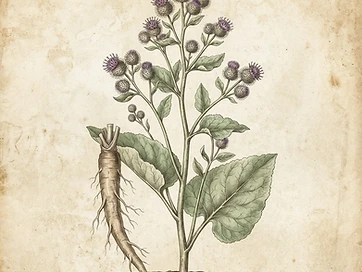
Arctium lappa
Burdock
Asteraceae
Earthy, bitter, slightly sweet, rooty


Echinacea purpurea
Echinacea
Asteraceae
Earthy, floral, slightly sharp


Artemisia abrotanum
Southernwood
Asteraceae
Sharp, camphor-like, herbaceous