
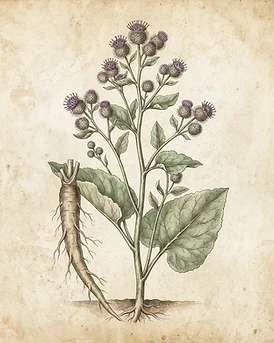
Arctium lappa
Burdock
Asteraceae
Identity
- Common Name
- Burdock
- Scientific Name
- Arctium lappa
- Botanical Family
- Asteraceae
- Native Region
- Eurasia
- Cultivation Regions
- East Asia, Europe, North America
- Plant Parts Used
- Root, Seeds
- Synonyms
- Gobo, Niubangzi, Beggar's Buttons
- Caffeine Level
- Caffeine Free
A robust biennial 1-2 m tall with large broad heart-shaped rhubarb-like leaves, round purple thistle-like flower heads with hooked bracts that cling to fur, and a long tapering fleshy taproot.
Historical Background
Burdock has been a staple of European 'alterative' (blood-purifying) traditions and East Asian medicine for centuries, its root simmered as a nourishing decoction and its prickly burrs reputed to have inspired the hook-and-loop fastener. In Japan the root (gobo) is eaten as food and tea.
Earliest recorded uses: European and East Asian (TCM, where the seed niubangzi is used) medicine for centuries; a traditional 'blood cleanser.'
Traditional preparations:
- Root decoction
- Roasted root 'coffee' tea
- Cleansing blends with dandelion
Traditional Uses
These uses document historical traditions and do not imply proven effectiveness.
Traditional Chinese Medicine
Cooling 'blood-clearing' and detoxifying herb; root decoction for skin.
Traditional European Herbalism
Alterative ('blood cleanser'), digestive, and skin tonic.
Modern Herbalism
Detox and skin-support decoction.
Flavor & Aroma
Aroma: Earthy, bitter, slightly sweet, rooty
Tea Information
Safety & Cautions
Research Summary
Burdock has a long tradition as an 'alterative' and skin herb, and its root is a nutritious food. Clinical evidence for its traditional uses is insufficient; preclinical work suggests anti-inflammatory and prebiotic effects. It is not a treatment for skin disease or any condition.
Evidence levels reflect the currently available scientific literature and may change as new research emerges. Where evidence is limited or conflicting, this is stated plainly.
References & Sources
Related Herbs

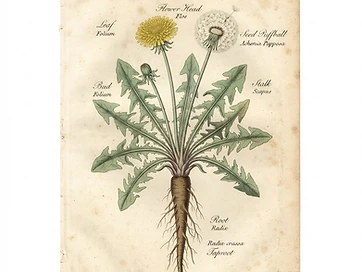
Taraxacum officinale
Dandelion
Asteraceae
Earthy, bitter, mildly roasted

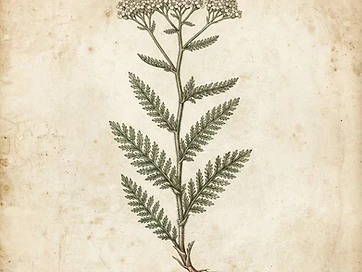
Achillea millefolium
Yarrow
Asteraceae
Herbal, bitter, slightly sweet, aromatic

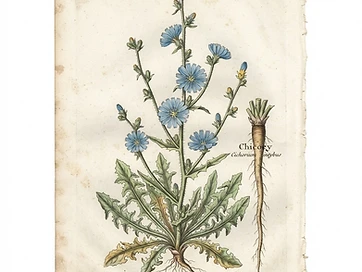
Cichorium intybus
Chicory
Asteraceae
Roasted, nutty, earthy, bitter