
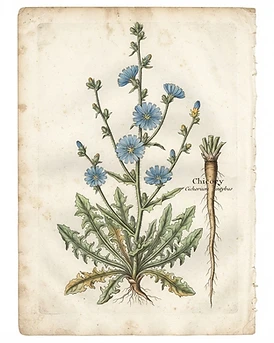
Cichorium intybus
Chicory
Asteraceae
Identity
- Common Name
- Chicory
- Scientific Name
- Cichorium intybus
- Botanical Family
- Asteraceae
- Native Region
- Europe
- Cultivation Regions
- Europe, Mediterranean, North America, India
- Plant Parts Used
- Root, Leaves
- Synonyms
- Coffeeweed, Succory, Blue Sailors
- Caffeine Level
- Caffeine Free
A perennial 30-120 cm tall with a rosette of ruffled lobed leaves, a tall branching stem bearing striking clear-blue dandelion-like ray flowers, and a long deep taproot traditionally roasted as a coffee alternative.
Historical Background
Chicory has been grown since antiquity for its bitter leaves and roasted root. During Napoleonic Europe and through wartime coffee shortages, roasted chicory root became a beloved caffeine-free coffee substitute and additive in France, New Orleans, and beyond — a tradition that survives in café au lait chicory blends today.
Earliest recorded uses: Ancient Egyptian, Greek, and Roman use; roasted-root coffee substitute since the 18th century.
Traditional preparations:
- Roasted-root decoction (coffee substitute)
- Leaf infusion
Traditional Uses
These uses document historical traditions and do not imply proven effectiveness.
Traditional European Herbalism
Digestive bitter and liver-supportive root; prebiotic.
Modern Herbalism
Caffeine-free coffee alternative; gentle digestive.
Flavor & Aroma
Aroma: Roasted, nutty, earthy, bitter
Tea Information
Safety & Cautions
Research Summary
Chicory root is rich in inulin, a prebiotic fiber with documented effects on gut flora and bowel function. Its traditional liver and digestive uses have limited clinical evidence, and it is not a treatment for liver disease. Roasted chicory is widely enjoyed as a caffeine-free coffee alternative.
Evidence levels reflect the currently available scientific literature and may change as new research emerges. Where evidence is limited or conflicting, this is stated plainly.
References & Sources
Related Herbs

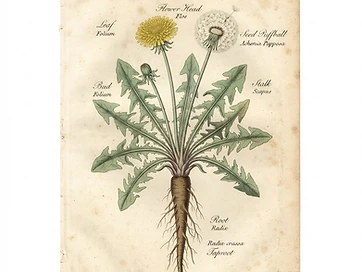
Taraxacum officinale
Dandelion
Asteraceae
Earthy, bitter, mildly roasted

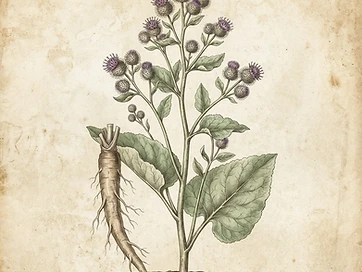
Arctium lappa
Burdock
Asteraceae
Earthy, bitter, slightly sweet, rooty

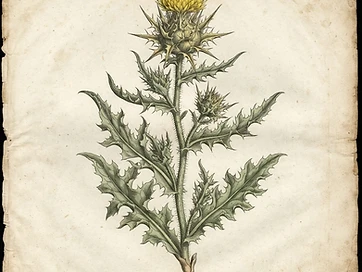
Cnicus benedictus
Blessed Thistle
Asteraceae
Bitter, herbaceous, slightly warm