
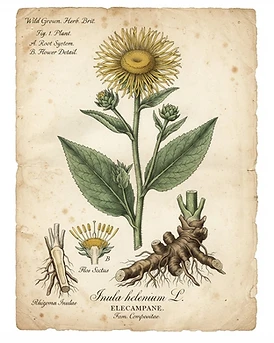
Inula helenium
Elecampane
Asteraceae
Identity
- Common Name
- Elecampane
- Scientific Name
- Inula helenium
- Botanical Family
- Asteraceae
- Native Region
- Europe and western Asia
- Cultivation Regions
- Europe, Asia, North America
- Plant Parts Used
- Root
- Synonyms
- Horseheal, Wild Sunflower, Elfwort, Inula
- Caffeine Level
- Caffeine Free
A tall, stout perennial with large oval leaves and a single shaggy yellow composite flower. The thick aromatic root is rich in inulin and is the medicinal part.
Historical Background
Sacred to the Celts ('Elfwort') and used since antiquity, elecampane root was a favorite European expectorant and digestive tonic, candied as a confection and brewed for stubborn coughs.
Earliest recorded uses: Chronic cough, chest congestion, and as a digestive tonic.
Cultural significance: A feature of monastery gardens and cottage syrup-making; candied elecampane root was a traditional sweet.
Classical
Dioscorides and Galen describe elecampane for chest and stomach.
European
Candied root and syrups popular for cough and digestion.
Traditional preparations:
- Decoction
- Candied root
- Syrup
Traditional Uses
These uses document historical traditions and do not imply proven effectiveness.
Traditional European Herbalism
Root decoction as a warming expectorant for chronic cough and as a bitter digestive tonic.
Flavor & Aroma
Aroma: Pungent, earthy, aromatic
Tea Information
Safety & Cautions
Research Summary
Alantolactone and inulin are studied for expectorant and antimicrobial effects; clinical evidence for respiratory outcomes is limited.
Evidence levels reflect the currently available scientific literature and may change as new research emerges. Where evidence is limited or conflicting, this is stated plainly.
References & Sources
References & Sources
- American Botanical Council · Expanded Commission E Monographs (2000)
- American Herbal Products Association · Botanical Safety Handbook (2013)
Related Herbs


Inula helenium
Elecampane
Asteraceae
Warm, bitter, camphoraceous, honey-spicy


Artemisia abrotanum
Southernwood
Asteraceae
Sharp, camphor-like, herbaceous

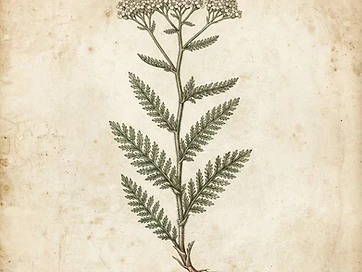
Achillea millefolium
Yarrow
Asteraceae
Herbal, bitter, slightly sweet, aromatic