
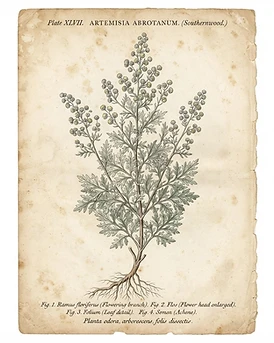
Artemisia abrotanum
Southernwood
Asteraceae
Identity
- Common Name
- Southernwood
- Scientific Name
- Artemisia abrotanum
- Botanical Family
- Asteraceae
- Native Region
- Southern Europe
- Cultivation Regions
- Europe, Asia, North America
- Plant Parts Used
- Aerial parts, Leaves
- Synonyms
- Old Man, Lad's Love, Maiden's Ruin
- Caffeine Level
- Caffeine Free
A woody shrub with finely divided, feathery, silver-green aromatic foliage and small grayish-yellow flower clusters. The lacy leaves release a sharp camphor-thujone scent when brushed.
Historical Background
Cultivated in European monastery and cottage gardens since medieval times as a bitter digestive, vermifuge, and fragrant strewing herb. Also used to make 'young men's' tonics.
Earliest recorded uses: Digestive bitterness, worms, appetite, and topical use for hair and skin.
Cultural significance: Carried in nosegays and laid in wardrobes to deter moths and mask odors; the common names 'Old Man' and 'Lad's Love' reflect its folk associations.
Medieval
Grown in monastery physic gardens as a digestive and vermifuge.
Victorian
Common in cottage gardens as a strewing and fragrance herb.
Traditional preparations:
- Hot infusion (bitter, aromatic)
- Cool infusion
Traditional Uses
These uses document historical traditions and do not imply proven effectiveness.
Traditional European Herbalism
Bitter tonic to stimulate appetite and digestion; infusion for worms and feverish colds.
Flavor & Aroma
Aroma: Sharp, camphor-like, herbaceous
Tea Information
Safety & Cautions
Research Summary
Used almost entirely on traditional grounds; contains thujone and related monoterpenes. Modern clinical evidence is lacking.
Evidence levels reflect the currently available scientific literature and may change as new research emerges. Where evidence is limited or conflicting, this is stated plainly.
References & Sources
References & Sources
- American Herbal Products Association · Botanical Safety Handbook (2013)
- Maud Grieve · A Modern Herbal (historical reference) (1931)
Related Herbs


Inula helenium
Elecampane
Asteraceae
Warm, bitter, camphoraceous, honey-spicy


Inula helenium
Elecampane
Asteraceae
Pungent, earthy, aromatic

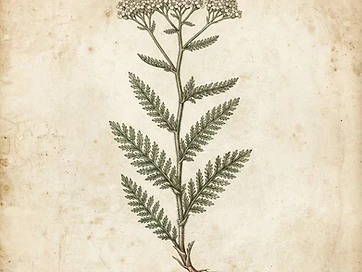
Achillea millefolium
Yarrow
Asteraceae
Herbal, bitter, slightly sweet, aromatic