
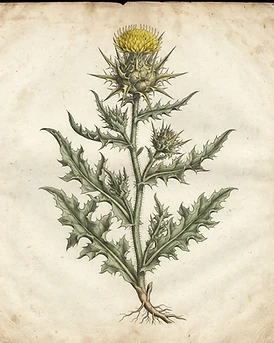
Cnicus benedictus
Blessed Thistle
Asteraceae
Identity
- Common Name
- Blessed Thistle
- Scientific Name
- Cnicus benedictus
- Botanical Family
- Asteraceae
- Native Region
- Mediterranean basin
- Cultivation Regions
- Mediterranean, Europe, Middle East
- Plant Parts Used
- Aerial parts
- Synonyms
- Holy Thistle, St. Benedict's Thistle, Cardo Santo
- Caffeine Level
- Caffeine Free
An upright annual with deeply lobed wavy green leaves covered in fine spines and a single yellow thistle-like flower head with spiny bracts; the aerial parts are the part used.
Historical Background
Blessed thistle has been a monastic and European digestive bitter since the Middle Ages, named for its devotional and healing reputation. Its bitter, herbaceous leaves brew a tonic tea traditionally sipped to stimulate appetite and digestion.
Earliest recorded uses: Used in European and monastic traditions since the Middle Ages; a bitter digestive and a Marian devotional herb.
Traditional preparations:
- Aerial-part infusion
- Bitter digestive tonic
- Appetite blend with ginger
Traditional Uses
These uses document historical traditions and do not imply proven effectiveness.
Traditional European Herbalism
Monastic bitter digestive and devotional herb.
Modern Herbalism
Bitter digestive tonic tea.
Flavor & Aroma
Aroma: Bitter, herbaceous, slightly warm
Tea Information
Safety & Cautions
Research Summary
Blessed thistle has a tradition as a bitter digestive tonic; preclinical work shows antioxidant and antimicrobial activity. Clinical evidence is insufficient; it is not a treatment for indigestion, poor appetite, or any disease, though it remains a classic bitter tonic tea.
Evidence levels reflect the currently available scientific literature and may change as new research emerges. Where evidence is limited or conflicting, this is stated plainly.
References & Sources
Related Herbs

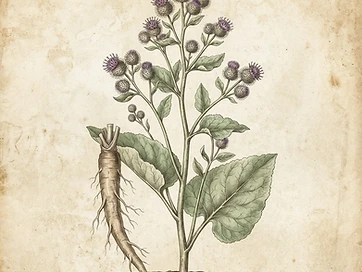
Arctium lappa
Burdock
Asteraceae
Earthy, bitter, slightly sweet, rooty

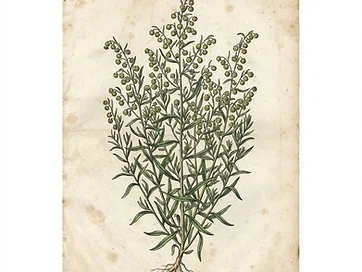
Artemisia dracunculus
Tarragon
Asteraceae
Anise-like, warm, herbaceous, slightly bittersweet

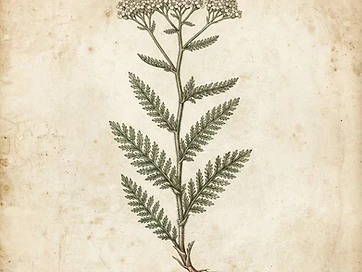
Achillea millefolium
Yarrow
Asteraceae
Herbal, bitter, slightly sweet, aromatic