
Galium odoratum
Woodruff
Rubiaceae
Identity
- Common Name
- Woodruff
- Scientific Name
- Galium odoratum
- Botanical Family
- Rubiaceae
- Native Region
- Europe, North Africa, and western Asia
- Plant Parts Used
- Aerial parts (leaves and stems)
- Caffeine Level
- None
A low perennial forming mats of whorled leaves on square stems, topped by small white star-shaped flowers. The dried plant develops a sweet coumarin scent.
Historical Background
Woodruff has flavored May wine since the Middle Ages in Germany and was used as a strewing herb and sachet for linen. Its sweet scent intensifies as the herb wilts and dries.
Earliest recorded uses: Mentioned in medieval German and French herbals; popularized in the tradition of Maibowle.
Cultural significance: Central to German spring festivals, woodruff gives May wine its signature aroma.
Traditional preparations:
- Wine infusion (Maibowle)
- Light infusion of dried herb
- Sachets
Traditional Uses
These uses document historical traditions and do not imply proven effectiveness.
German folk tradition
Used to flavor May wine and spring punches.
European folk medicine
Employed as a mild calmative and digestive; also used as a moth repellent in linen.
Flavor & Aroma
Aroma: Sweet, vanilla, freshly mown hay
Tea Information
Safety & Cautions
Research Summary
Coumarin is the main active compound responsible for aroma; medicinal use is limited by safety considerations.
Evidence levels reflect the currently available scientific literature and may change as new research emerges. Where evidence is limited or conflicting, this is stated plainly.
References & Sources
Related Herbs

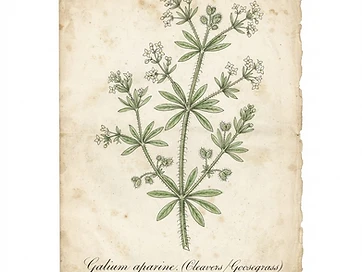
Galium aparine
Cleavers
Rubiaceae
Fresh, green, slightly grassy, mild

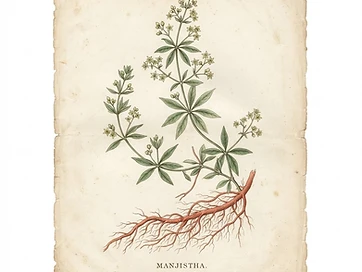
Rubia cordifolia
Manjistha
Rubiaceae
Earthy, slightly bitter, herbaceous


Morinda citrifolia
Noni
Rubiaceae
Strong, fruity-pungent, slightly cheesy