
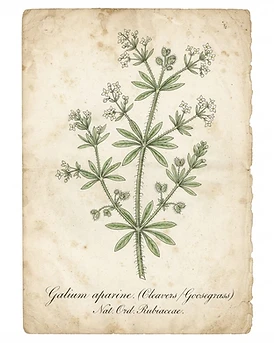
Galium aparine
Cleavers
Rubiaceae
Identity
- Common Name
- Cleavers
- Scientific Name
- Galium aparine
- Botanical Family
- Rubiaceae
- Native Region
- Europe and western Asia
- Cultivation Regions
- Europe, North America, temperate regions
- Plant Parts Used
- Aerial parts
- Synonyms
- Goosegrass, Bedstraw, Clivers
- Caffeine Level
- Caffeine Free
A sprawling climbing annual with whorls of narrow lanceolate green leaves, tiny white star-like flowers, and curved bristly hairs that cling along the stem; the aerial parts are used.
Historical Background
Cleavers has been a European spring 'cleansing' herb for centuries, its clinging bristly stems gathered to brew a gentle lymphatic and diuretic tea. A favorite of traditional spring tonics, it brews a fresh, mild, caffeine-free cup tied to lymph and kidney traditions.
Earliest recorded uses: European traditions for centuries; a spring 'cleansing' and lymphatic herb.
Traditional preparations:
- Aerial-part infusion
- Spring cleansing tonic
- Gentle lymphatic cup
Traditional Uses
These uses document historical traditions and do not imply proven effectiveness.
European Folk Traditions
Spring 'cleansing' and lymphatic herb.
Modern Herbalism
Gentle diuretic and lymph tonic.
Flavor & Aroma
Aroma: Fresh, green, slightly grassy, mild
Tea Information
Safety & Cautions
Research Summary
Cleavers has a tradition as a gentle lymphatic, diuretic, and 'cleansing' spring tea; preclinical work shows mild diuretic and antioxidant activity. Clinical evidence is insufficient; it is not a treatment for lymphedema, kidney disease, skin conditions, or any disease, though it remains a gentle, pleasant spring tonic cup.
Evidence levels reflect the currently available scientific literature and may change as new research emerges. Where evidence is limited or conflicting, this is stated plainly.
References & Sources
Related Herbs

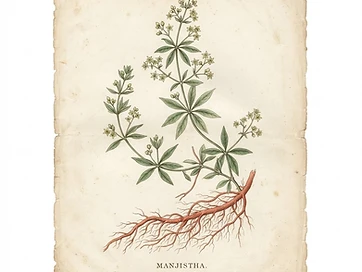
Rubia cordifolia
Manjistha
Rubiaceae
Earthy, slightly bitter, herbaceous


Betula pendula
Birch Leaf
Betulaceae
Fresh, green, slightly wintergreen, clean


Morinda citrifolia
Noni
Rubiaceae
Strong, fruity-pungent, slightly cheesy