


Lactuca virosa
Wild Lettuce
Asteraceae
Identity
- Common Name
- Wild Lettuce
- Scientific Name
- Lactuca virosa
- Botanical Family
- Asteraceae
- Native Region
- Europe and the Mediterranean
- Cultivation Regions
- Europe, North Africa, temperate regions
- Plant Parts Used
- Leaves, Milky latex (lactucarium)
- Synonyms
- Bitter Lettuce, Lactucarium, Opium Lettuce
- Caffeine Level
- Caffeine Free
A tall biennial with large lobed blue-green leaves clasping a hollow stem that exudes a milky latex, and a loose pyramidal cluster of small pale-yellow composite flowers; the leaves and latex are used.
Historical Background
Wild lettuce has been a European and Mediterranean folk sedative for centuries, its milky latex ('lactucarium') prized as 'lettuce opium' for pain and sleep. The leaves brew a mild, calming, caffeine-free cup, while the concentrated latex is far stronger and historically used cautiously.
Earliest recorded uses: European and Mediterranean traditions for centuries; a mild sedative and pain herb ('lettuce opium').
Traditional preparations:
- Leaf infusion
- Calming evening tea
- Practitioner-guided latex use
Traditional Uses
These uses document historical traditions and do not imply proven effectiveness.
European Folk Traditions
Mild folk sedative and pain herb.
Modern Herbalism
Calming caffeine-free cup (leaves only).
Flavor & Aroma
Aroma: Mild, green, slightly bitter, milky
Tea Information
Safety & Cautions
Research Summary
Wild lettuce has a tradition as a mild sedative and pain herb; preclinical work suggests sedative activity from lactucarium (lactucin). Clinical evidence is insufficient; it is not a treatment for insomnia, pain, anxiety, or any disease, and its concentrated latex warrants cautious, practitioner-guided use.
Evidence levels reflect the currently available scientific literature and may change as new research emerges. Where evidence is limited or conflicting, this is stated plainly.
References & Sources
Related Herbs

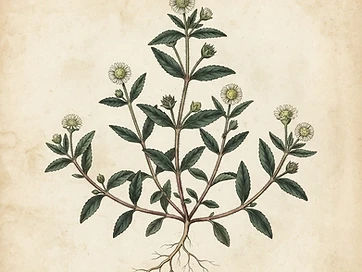
Eclipta prostrata
Bhringraj
Asteraceae
Mild, slightly bitter, green


Cynara cardunculus
Artichoke Leaf
Asteraceae
Mild, slightly bitter, green, earthy


Carthamus tinctorius
Safflower
Asteraceae
Mild, slightly bitter, green