
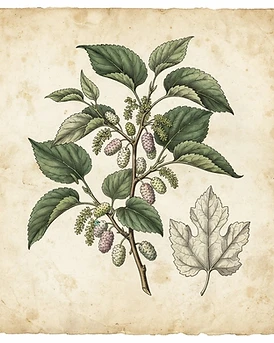
Morus alba
White Mulberry Leaf
Moraceae
Identity
- Common Name
- White Mulberry Leaf
- Scientific Name
- Morus alba
- Botanical Family
- Moraceae
- Native Region
- East Asia (China)
- Cultivation Regions
- China, East Asia, Mediterranean, worldwide
- Plant Parts Used
- Leaves
- Synonyms
- Sang Ye, Mulberry Leaf, Silkworm Leaf
- Caffeine Level
- Caffeine Free
A deciduous tree with large heart-shaped glossy dark green toothed leaves, a cluster of small greenish catkin-like flowers, and ripening white-to-pink mulberry fruits; the leaves are the part used in tea.
Historical Background
White mulberry leaf is the food of the silkworm and a traditional tea of East Asia, where it has been sipped for centuries for blood-sugar and heart traditions (sang ye). Its gentle, mild cup is a popular daily tea in Korea and Japan.
Earliest recorded uses: Used in Chinese medicine for centuries; the silkworm's food and a traditional blood-sugar and heart tea (sang ye).
Traditional preparations:
- Leaf infusion
- Daily blood-sugar tea
- Calming green blend with jujube
Traditional Uses
These uses document historical traditions and do not imply proven effectiveness.
Traditional Chinese Medicine
Silkworm's food; blood-sugar and heart tea (sang ye).
Modern Herbalism
Blood-sugar and heart-tradition tea.
Flavor & Aroma
Aroma: Mild, slightly sweet, green, earthy
Tea Information
Safety & Cautions
Research Summary
White mulberry leaf has a tradition for blood-sugar and heart support; small trials suggest modest post-meal glucose effects, but clinical evidence is limited. It is not a treatment for diabetes, high cholesterol, or any disease; discuss with a clinician given drug interactions.
Evidence levels reflect the currently available scientific literature and may change as new research emerges. Where evidence is limited or conflicting, this is stated plainly.
References & Sources
Related Herbs


Nelumbo nucifera
Sacred Lotus
Nelumbonaceae
Mild, slightly sweet, green, earthy

Bupleurum chinense
Bupleurum
Apiaceae
Mild, slightly sweet, bittersweet, green


Carthamus tinctorius
Safflower
Asteraceae
Mild, slightly bitter, green