
Bupleurum chinense
Bupleurum
Apiaceae
Identity
- Common Name
- Bupleurum
- Scientific Name
- Bupleurum chinense
- Botanical Family
- Apiaceae
- Native Region
- East Asia (China, Japan)
- Cultivation Regions
- China, Japan, Korea
- Plant Parts Used
- Root
- Synonyms
- Chai Hu, Thorow Wax, Hare's Ear
- Caffeine Level
- Caffeine Free
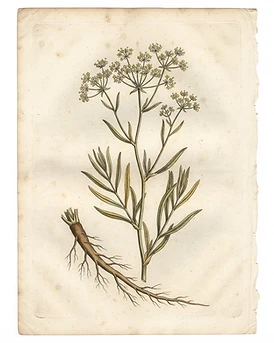
An erect perennial with alternate narrow lance-shaped leaves that clasp the stem, and small clusters of yellow flowers in umbels; the long thin tapering root is the part used in classic TCM formulas.
Historical Background
Bupleurum (chai hu) has been the chief herb of Traditional Chinese Medicine's 'harmonizing' formulas for over 2,000 years, used to soothe the Liver Qi and clear alternating heat-and-cold patterns. Its slender root is a pillar of classic formulas like Xiao Chai Hu Tang.
Earliest recorded uses: Used in TCM for over 2,000 years; the lead herb of the classic Harmonizing formula Xiao Chai Hu Tang.
Traditional preparations:
- Root decoction
- Harmonizing formula (Xiao Chai Hu Tang)
- Liver-support blend with licorice
Traditional Uses
These uses document historical traditions and do not imply proven effectiveness.
Traditional Chinese Medicine
Harmonizes Shaoyang, soothes Liver Qi; lead herb of harmonizing formulas.
Modern Herbalism
Liver-support and digestive adaptogen tea.
Flavor & Aroma
Aroma: Mild, slightly sweet, bittersweet, green
Tea Information
Safety & Cautions
Research Summary
Bupleurum has a long TCM tradition as a harmonizing liver herb. Clinical evidence is limited; preclinical work shows hepatoprotective and anti-inflammatory activity, but it is not a treatment for liver disease, hepatitis, or any condition, and interacts with immune-suppressive therapy.
Evidence levels reflect the currently available scientific literature and may change as new research emerges. Where evidence is limited or conflicting, this is stated plainly.
References & Sources
Related Herbs


Centella asiatica
Gotu Kola
Apiaceae
Green, earthy, slightly bitter, grassy


Anethum graveolens
Dill
Apiaceae
Fresh, grassy, slightly sweet, citrus-like

Coriandrum sativum
Coriander
Apiaceae
Warm, citrus-like, slightly sweet, aromatic