
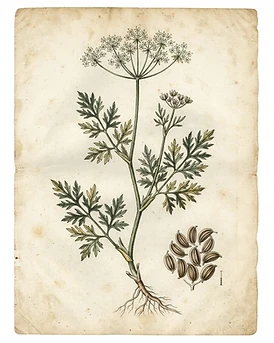
Carum carvi
Caraway
Apiaceae
Identity
- Common Name
- Caraway
- Scientific Name
- Carum carvi
- Botanical Family
- Apiaceae
- Native Region
- Europe and western Asia
- Cultivation Regions
- Europe, Egypt, Middle East
- Plant Parts Used
- Seeds
- Synonyms
- Meridian Fennel, Carvies, Kummel
- Caffeine Level
- Caffeine Free
A slender biennial with feathery pinnate compound leaves and a flat umbrella-shaped cluster (umbel) of tiny white flowers; the small elongated ribbed brown crescent-shaped seeds are the part used.
Historical Background
Caraway has flavored European and Egyptian breads and teas for millennia, its crescent seeds a classic digestive. A gentle caraway seed tea is traditionally sipped for digestion and mild colic comfort.
Earliest recorded uses: European and Egyptian traditions for millennia; a digestive seed for breads and teas.
Traditional preparations:
- Crushed-seed infusion
- Digestive tea with fennel
- Calming blend
Traditional Uses
These uses document historical traditions and do not imply proven effectiveness.
Traditional European Herbalism
Digestive seed for breads and teas.
Modern Herbalism
Digestive and calming tea.
Flavor & Aroma
Aroma: Warm, earthy, slightly sweet, peppery
Tea Information
Safety & Cautions
Research Summary
Caraway has a long tradition for digestion and colic; preclinical work shows antispasmodic and carminative activity (carvone). Clinical evidence is insufficient; it is not a treatment for IBS, colic, or any disease, though it remains a gentle folk digestive tea.
Evidence levels reflect the currently available scientific literature and may change as new research emerges. Where evidence is limited or conflicting, this is stated plainly.
References & Sources
Related Herbs

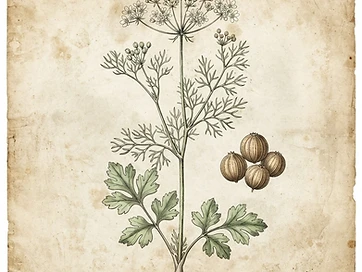
Coriandrum sativum
Coriander
Apiaceae
Warm, citrus-like, slightly sweet, aromatic

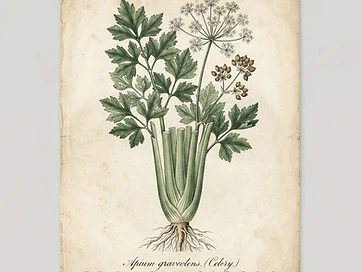
Apium graveolens
Celery Seed
Apiaceae
Warm, spicy, celery-like


Anethum graveolens
Dill
Apiaceae
Fresh, grassy, slightly sweet, citrus-like