
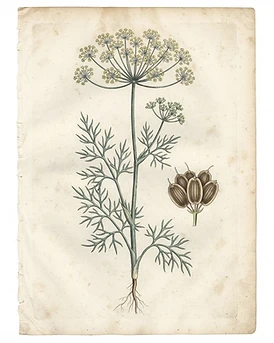
Anethum graveolens
Dill
Apiaceae
Identity
- Common Name
- Dill
- Scientific Name
- Anethum graveolens
- Botanical Family
- Apiaceae
- Native Region
- Mediterranean and western Asia
- Cultivation Regions
- Mediterranean, Europe, Asia, North America
- Plant Parts Used
- Leaves, Seeds
- Synonyms
- Dill Weed, Dill Seed, Anethum
- Caffeine Level
- Caffeine Free
A slender upright annual with feathery pinnate compound blue-green thread-like leaves and a flat umbrella-shaped cluster (umbel) of small yellow flowers; the leaves and flat oval brown ribbed seeds are used.
Historical Background
Dill has been a Mediterranean, Egyptian, and Asian digestive herb for millennia, its feathery leaves and seeds prized in pickles, breads, and teas. A gentle dill seed tea is traditionally sipped for digestion and colic comfort, especially for infants in folk tradition.
Earliest recorded uses: Used in Egyptian, Mediterranean, and Asian traditions for millennia; a digestive seed and herb.
Traditional preparations:
- Crushed-seed infusion
- Digestive tea with fennel
- Calming colic blend
Traditional Uses
These uses document historical traditions and do not imply proven effectiveness.
Mediterranean Traditions
Mediterranean digestive seed and herb.
Modern Herbalism
Digestive and calming tea.
Flavor & Aroma
Aroma: Fresh, grassy, slightly sweet, citrus-like
Tea Information
Safety & Cautions
Research Summary
Dill has a tradition for digestion and colic; preclinical work shows antispasmodic and carminative activity (carvone, limonene). Clinical evidence is insufficient; it is not a treatment for colic, IBS, or any disease, though it remains a gentle, popular digestive tea.
Evidence levels reflect the currently available scientific literature and may change as new research emerges. Where evidence is limited or conflicting, this is stated plainly.
References & Sources
Related Herbs

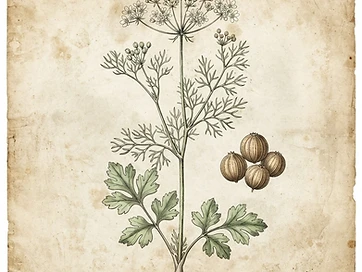
Coriandrum sativum
Coriander
Apiaceae
Warm, citrus-like, slightly sweet, aromatic

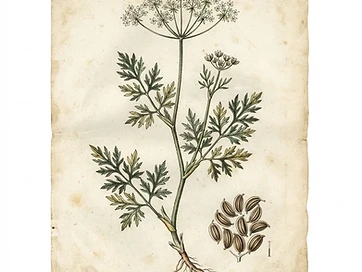
Carum carvi
Caraway
Apiaceae
Warm, earthy, slightly sweet, peppery

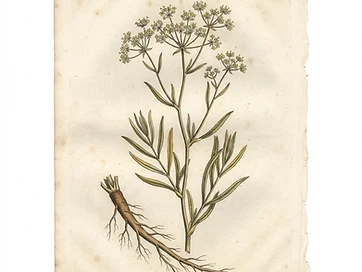
Bupleurum chinense
Bupleurum
Apiaceae
Mild, slightly sweet, bittersweet, green