
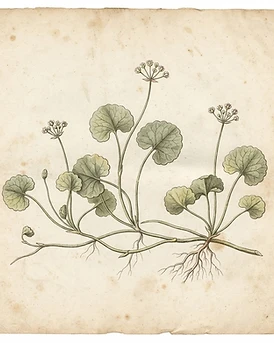
Centella asiatica
Gotu Kola
Apiaceae
Identity
- Common Name
- Gotu Kola
- Scientific Name
- Centella asiatica
- Botanical Family
- Apiaceae
- Native Region
- India, Southeast Asia, Madagascar
- Cultivation Regions
- India, Southeast Asia, Madagascar, tropical wetlands
- Plant Parts Used
- Leaves, Aerial parts
- Synonyms
- Indian Pennywort, Brahmi-booti, Mandookaparni
- Caffeine Level
- Caffeine Free
A low creeping perennial herb with slender stolons, long-stalked rounded kidney-shaped green leaf blades with scalloped margins, and tiny umbels of small white or pale-pink flowers near the soil.
Historical Background
Gotu kola has been revered in Ayurveda and Sri Lankan folk medicine for thousands of years as a rasayana for longevity, memory, and skin healing. Legend held that elephants — long-lived animals — grazed on it, giving rise to its reputation as a life-extending herb.
Earliest recorded uses: Ayurveda and classical Sri Lankan (Sinhalese) medicine; one of the rasayana rejuvenatives.
Traditional preparations:
- Leaf infusion
- Fresh leaf paste (topical)
- Rasayana decoction
Traditional Uses
These uses document historical traditions and do not imply proven effectiveness.
Ayurveda
Rejuvenative (rasayana) for memory, longevity, and meditation.
Traditional Chinese Medicine
Cooling herb for skin, heat, and circulation.
Modern Herbalism
Adaptogen for stress and cognitive support.
Flavor & Aroma
Aroma: Green, earthy, slightly bitter, grassy
Tea Information
Safety & Cautions
Research Summary
Gotu kola has a long Ayurvedic tradition for cognition, wound healing, and skin. Small trials suggest modest benefits for venous circulation, wound healing, and anxiety, but evidence is limited and it is not a treatment for cognitive decline or any disease.
Evidence levels reflect the currently available scientific literature and may change as new research emerges. Where evidence is limited or conflicting, this is stated plainly.
References & Sources
Related Herbs

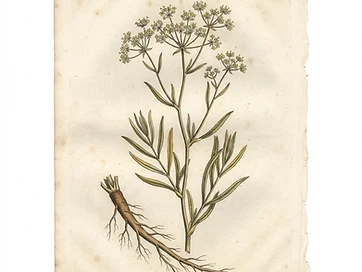
Bupleurum chinense
Bupleurum
Apiaceae
Mild, slightly sweet, bittersweet, green


Angelica sinensis
Dong Quai
Apiaceae
Musky, earthy, sweet-bitter, aromatic

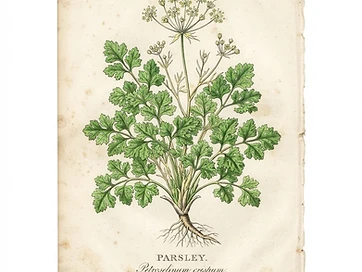
Petroselinum crispum
Parsley
Apiaceae
Fresh, grassy, green