
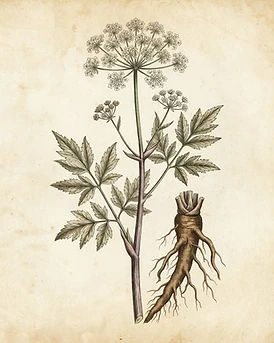
Angelica sinensis
Dong Quai
Apiaceae
Identity
- Common Name
- Dong Quai
- Scientific Name
- Angelica sinensis
- Botanical Family
- Apiaceae
- Native Region
- China
- Cultivation Regions
- China, Japan, Korea
- Plant Parts Used
- Root
- Synonyms
- Dang Gui, Tang Kuei, Female Ginseng
- Caffeine Level
- Caffeine Free
A tall fragrant perennial umbellifer 0.5-1 m tall with divided pinnate leaflets, compound umbels of small white flowers, and a thick, brown, branched aromatic taproot used medicinally.
Historical Background
Known as the 'female ginseng,' dong quai has been the premier women's herb of Traditional Chinese Medicine for over two millennia, prescribed to nourish blood and regulate menstruation. Its aromatic root is simmered in decoctions and prized for a distinctive sweet-bitter, earthy-musky aroma.
Earliest recorded uses: Recorded in the Shennong Ben Cao Jing (~2000 years ago); a cornerstone of TCM gynecology.
Traditional preparations:
- Root decoction
- Blood-nourishing soup/tea
- TCM formula ingredient
Traditional Uses
These uses document historical traditions and do not imply proven effectiveness.
Traditional Chinese Medicine
Nourishes Blood, invigorates circulation, regulates menstruation; premier women's tonic.
Modern Herbalism
Women's tonic and adaptogen (use with caution).
Flavor & Aroma
Aroma: Musky, earthy, sweet-bitter, aromatic
Tea Information
Safety & Cautions
Research Summary
Dong quai is a pillar of TCM for women's health. Clinical evidence is limited and inconsistent; trials are small and poorly designed. It carries notable bleeding risk (coumarins) and is not a treatment for menstrual disorders or infertility.
Evidence levels reflect the currently available scientific literature and may change as new research emerges. Where evidence is limited or conflicting, this is stated plainly.
References & Sources
Related Herbs


Foeniculum vulgare
Fennel
Apiaceae
Sweet, anise, licorice-like


Eryngium yuccifolium
Eryngo
Apiaceae
Faint, rooty, herbaceous

Pimpinella anisum
Anise
Apiaceae
Sweet, licorice-like, warm, aromatic