


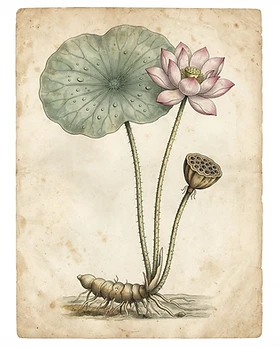
Nelumbo nucifera
Sacred Lotus
Nelumbonaceae
Identity
- Common Name
- Sacred Lotus
- Scientific Name
- Nelumbo nucifera
- Botanical Family
- Nelumbonaceae
- Native Region
- Asia and northern Australia
- Cultivation Regions
- China, India, Southeast Asia, Egypt
- Plant Parts Used
- Leaves, Seeds, Stamens
- Synonyms
- Lotus Leaf, He Ye, Lian Zi
- Caffeine Level
- Caffeine Free
An aquatic perennial with large round peltate leaves on tall stems, single large pink flowers, and a distinctive flat-topped seed pod; the leaves, seeds, and stamens are all used in tea and cuisine.
Historical Background
The sacred lotus has been revered across Hindu, Buddhist, and ancient Egyptian traditions for millennia as a symbol of purity rising from mud. Its leaves, seeds, and stamens are all brewed into gentle, slightly astringent teas prized in Chinese and Ayurvedic cuisine.
Earliest recorded uses: Used in Ayurvedic, Chinese, and Egyptian traditions for millennia; a sacred symbol of purity and enlightenment.
Traditional preparations:
- Leaf infusion
- Lotus seed tea
- Stamen (lian xu) tea
Traditional Uses
These uses document historical traditions and do not imply proven effectiveness.
Traditional Chinese Medicine
Sacred purity symbol; leaf and seed for digestion, cooling, and calm.
Modern Herbalism
Gentle soothing and cooling tea.
Flavor & Aroma
Aroma: Mild, slightly sweet, green, earthy
Tea Information
Safety & Cautions
Research Summary
Sacred lotus has a long tradition as a soothing, digestive, and cooling tea. Preclinical work shows antioxidant activity, but clinical evidence is limited and it is not a treatment for diarrhea, fever, or any disease.
Evidence levels reflect the currently available scientific literature and may change as new research emerges. Where evidence is limited or conflicting, this is stated plainly.
References & Sources
Related Herbs

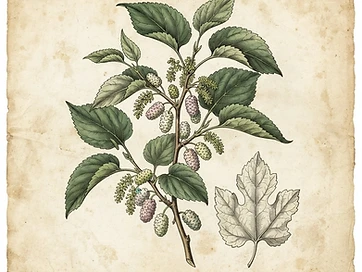
Morus alba
White Mulberry Leaf
Moraceae
Mild, slightly sweet, green, earthy

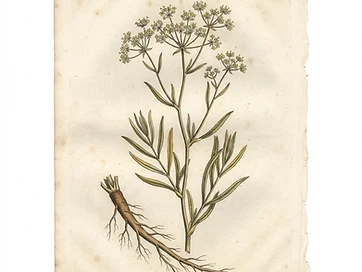
Bupleurum chinense
Bupleurum
Apiaceae
Mild, slightly sweet, bittersweet, green


Moringa oleifera
Moringa
Moringaceae
Mild, slightly peppery, green, earthy