
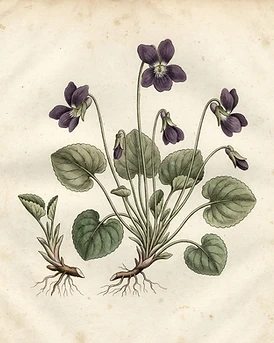
Viola odorata
Sweet Violet
Violaceae
Identity
- Common Name
- Sweet Violet
- Scientific Name
- Viola odorata
- Botanical Family
- Violaceae
- Native Region
- Europe and the Mediterranean
- Cultivation Regions
- Europe, Mediterranean, Asia, North America
- Plant Parts Used
- Flowers, Leaves
- Synonyms
- English Violet, Sweet-Scented Violet, Garden Violet
- Caffeine Level
- Caffeine Free
A low perennial with heart-shaped rounded basal leaves on long stalks and single fragrant deep violet five-petalled flowers with a pale spur; the leaves and flowers are the part used.
Historical Background
Sweet violet has been a symbol of love and a soothing cough herb since Greek, Roman, and medieval European times. Its fragrant purple blossoms scent spring gardens and brew into a gentle, demulcent cup traditionally sipped for throat and chest comfort.
Earliest recorded uses: Greek, Roman, and medieval European traditions for millennia; a symbol of love and a soothing cough herb.
Traditional preparations:
- Flower infusion
- Soothing throat tea
- Violet-syrup tradition
Traditional Uses
These uses document historical traditions and do not imply proven effectiveness.
Traditional European Herbalism
Soothing throat, chest, and skin herb; symbol of love.
Modern Herbalism
Gentle soothing and floral tea.
Flavor & Aroma
Aroma: Floral, sweet, green, slightly mucilaginous
Tea Information
Safety & Cautions
Research Summary
Sweet violet has a long tradition as a soothing throat and skin herb. Clinical evidence is insufficient; its mucilage provides comfort, but it is not a treatment for cough, cancer, or any disease.
Evidence levels reflect the currently available scientific literature and may change as new research emerges. Where evidence is limited or conflicting, this is stated plainly.
References & Sources
Related Herbs

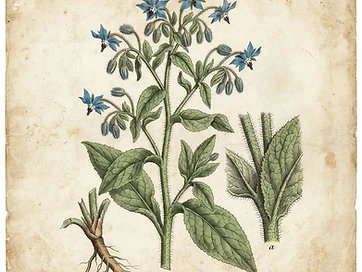
Borago officinalis
Borage
Boraginaceae
Mild, slightly cucumber-like, green, floral

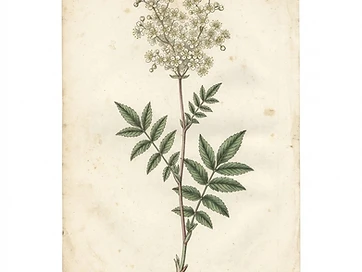
Filipendula ulmaria
Meadowsweet
Rosaceae
Sweet, almond-like, floral, honeyed

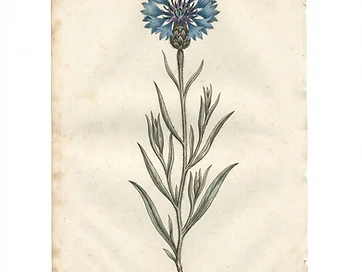
Centaurea cyanus
Cornflower
Asteraceae
Floral, mild, slightly sweet, green