
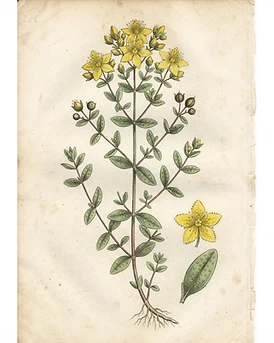
Hypericum perforatum
St. John's Wort
Hypericaceae
Identity
- Common Name
- St. John's Wort
- Scientific Name
- Hypericum perforatum
- Botanical Family
- Hypericaceae
- Native Region
- Europe and Asia
- Cultivation Regions
- Europe, North America, Asia, Australia
- Plant Parts Used
- Aerial parts, Flowering tops
- Synonyms
- Hypericum, Klamath Weed, Tipton's Weed
- Caffeine Level
- Caffeine Free
An erect perennial 30-80 cm tall with opposite oval leaves held to light showing translucent oil glands, and flat-topped clusters of bright yellow five-petalled flowers with many bushy stamens dotted with black glands.
Historical Background
St. John's wort has been a revered European healing herb since antiquity, named for the feast of St. John the Baptist near which it blooms. Its golden, oil-dotted flowers were infused in oil for a red healing salve, and the plant has long been used to lift the spirits. Today it is among the most studied herbal mood remedies.
Earliest recorded uses: Greek and medieval European medicine; named for St. John the Baptist (blooms near his feast day); a traditional mood herb.
Traditional preparations:
- Aerial-part infusion
- Red oil infusion (topical)
- Mood blends with lemon balm
Traditional Uses
These uses document historical traditions and do not imply proven effectiveness.
Traditional European Herbalism
Nervine for low mood, wounds, and seasonal melancholy.
Modern Herbalism
Mood-supporting nervine (with major drug-interaction caution).
Flavor & Aroma
Aroma: Herbal, warm, balsamic, slightly bitter
Tea Information
Safety & Cautions
Research Summary
St. John's wort has the strongest clinical evidence of most herbs for mild-to-moderate low mood, with trials comparing it to standard antidepressants. However, it has clinically significant drug interactions that can reduce the effectiveness of many medications. It is not a substitute for professional care and must be discussed with a clinician.
Evidence levels reflect the currently available scientific literature and may change as new research emerges. Where evidence is limited or conflicting, this is stated plainly.
References & Sources
Related Herbs


Verbena hastata
Blue Vervain
Verbenaceae
Herbal, slightly bitter, green, earthy

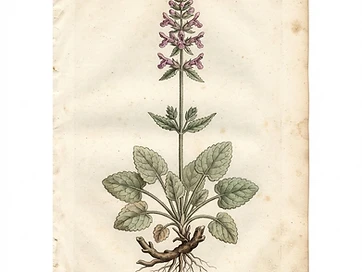
Stachys officinalis
Wood Betony
Lamiaceae
Mild, herbal, slightly bitter, green


Leonurus cardiaca
Motherwort
Lamiaceae
Herbal, slightly bitter, green, earthy