
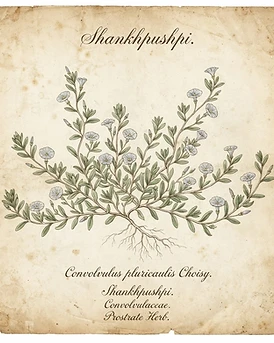
Convolvulus pluricaulis
Shankhpushpi
Convolvulaceae
Identity
- Common Name
- Shankhpushpi
- Scientific Name
- Convolvulus pluricaulis
- Botanical Family
- Convolvulaceae
- Native Region
- South Asia
- Cultivation Regions
- South Asia
- Plant Parts Used
- Aerial parts
- Synonyms
- Aloe Weed, Shankhahuli
- Caffeine Level
- Caffeine Free
A prostrate creeping morning-glory vine with small fleshy green lanceolate leaves and tiny light-blue funnel-shaped flowers; the aerial parts are used.
Historical Background
Shankhpushpi has been a revered Ayurvedic 'medhya rasayana' for millennia, a calming herb for mind, memory, and sleep. Its gentle green brew is sipped for cognitive and nervous-system traditions and remains a prized Ayurvedic nervine and brain tonic.
Earliest recorded uses: Ayurvedic traditions for millennia; a renowned calming and cognitive herb.
Traditional preparations:
- Aerial-part infusion
- Calming mind tea
- Ayurvedic nervine cup
Traditional Uses
These uses document historical traditions and do not imply proven effectiveness.
Ayurvedic Traditions
Calming 'medhya rasayana' for mind and memory.
Modern Herbalism
Nervine and cognitive tonic.
Flavor & Aroma
Aroma: Mild, green, slightly sweet, herbaceous
Tea Information
Safety & Cautions
Research Summary
Shankhpushpi has a tradition as a calming, memory, and sleep herb; preclinical work shows mild anxiolytic, nootropic, and antioxidant activity. Clinical evidence is insufficient; it is not a treatment for anxiety, cognitive decline, epilepsy, or any disease, though it remains a respected Ayurvedic nervine.
Evidence levels reflect the currently available scientific literature and may change as new research emerges. Where evidence is limited or conflicting, this is stated plainly.
References & Sources
Related Herbs


Nymphaea caerulea
Blue Lotus
Nymphaeaceae
Floral, green, slightly sweet, earthy


Lycopus virginicus
Bugleweed
Lamiaceae
Mild, green, slightly minty, herbaceous

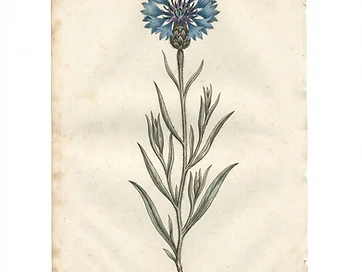
Centaurea cyanus
Cornflower
Asteraceae
Floral, mild, slightly sweet, green