
Citrus aurantium
Seville Orange
Rutaceae
Identity
- Common Name
- Seville Orange
- Scientific Name
- Citrus aurantium
- Botanical Family
- Rutaceae
- Native Region
- Southeast Asia
- Cultivation Regions
- Mediterranean, Asia, warm temperate regions
- Plant Parts Used
- Peel, Flowers (neroli), Leaves
- Synonyms
- Bitter Orange, Sour Orange, Zhi Shi
- Caffeine Level
- Caffeine Free (but synephrine is stimulant)
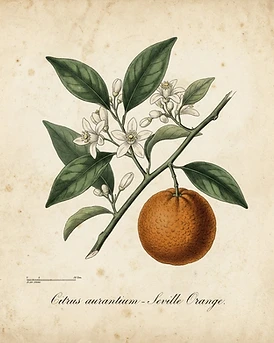
An evergreen tree with glossy ovate leaves, fragrant white orange-blossom flowers, and a round bumpy orange fruit; the leaves, flowers (neroli), and peel are used.
Historical Background
Seville (bitter) orange has been a Mediterranean and Asian treasure for centuries, its sour fruit prized for marmalade, its fragrant blossom distilled into neroli, and its leaves and peel brewed into a bitter digestive tea. Traditional Chinese practice uses the immature fruit (zhi shi) for digestion.
Earliest recorded uses: Mediterranean and Asian traditions for centuries; a bitter orange for peel, blossom (neroli), and leaf.
Traditional preparations:
- Peel decoction
- Neroli blossom infusion
- Bitter digestive tea
Traditional Uses
These uses document historical traditions and do not imply proven effectiveness.
Chinese Traditions
Bitter digestive peel (zhi shi) and neroli blossom.
Mediterranean Traditions
Bitter digestive and aromatic cup.
Flavor & Aroma
Aroma: Citrus, bitter-orange, floral, slightly spicy
Tea Information
Safety & Cautions
Research Summary
Seville orange has a tradition as a bitter digestive, and its blossom (neroli) as a calming aroma; the peel contains synephrine, a stimulant with cardiovascular concerns at high doses. Clinical evidence is mixed; it is not a treatment for obesity, indigestion, anxiety, or any disease, and stimulant-containing products warrant caution.
Evidence levels reflect the currently available scientific literature and may change as new research emerges. Where evidence is limited or conflicting, this is stated plainly.
References & Sources
Related Herbs


Citrus hystrix
Makrut Lime Leaf
Rutaceae
Citrus, lime, floral, slightly peppery


Citrus limon
Lemon Peel
Rutaceae
Bright, citrus, zesty, slightly sweet

Agathosma betulina
Buchu
Rutaceae
Sharp, fruity, herbaceous