
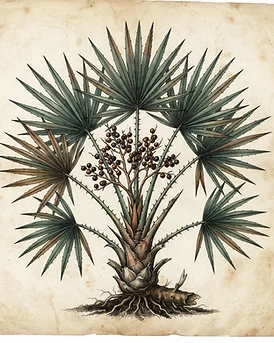
Serenoa repens
Saw Palmetto
Arecaceae
Identity
- Common Name
- Saw Palmetto
- Scientific Name
- Serenoa repens
- Botanical Family
- Arecaceae
- Native Region
- Southeastern United States
- Cultivation Regions
- Southeastern US, Florida
- Plant Parts Used
- Dried berries (fruit)
- Synonyms
- Dwarf Palmetto, Sabal
- Caffeine Level
- Caffeine Free
A low-growing fan palm 1–3 m tall with stiff, saw-toothed petioles and large, divided fan-shaped fronds. Creamy-white flowers give way to olive-sized berries that ripen to deep blue-black and carry a pungent, slightly soapy odor.
Historical Background
The berries were a staple food and medicine of the Seminole, Miccosukee, and other Indigenous peoples of the southeastern United States. Saw palmetto entered eclectic medical practice in the late 19th century as a 'glandular tonic' and became, by the late 20th century, one of the most widely used herbal supplements in the world for prostate-related urinary symptoms.
Earliest recorded uses: Indigenous use of the berries as food and for urinary and reproductive complaints; adopted by American eclectic physicians in the 1870s.
Cultural significance: The palm's fronds provided fiber and thatch, while its berries were a survival food. It became the defining herb of the 'male tonic' tradition in American eclectic medicine and remains culturally emblematic of men's herbalism.
Pre-colonial
Indigenous peoples of the SE US use berries for food and urinary complaints.
1870s
Adopted by eclectic physicians as a reproductive organ tonic.
1990s–2000s
Becomes a top-selling herbal supplement for BPH symptoms in Europe and the US.
Traditional preparations:
- Berry decoction (bitter)
- Tincture of the dried berries
- Modern lipid extracts
Traditional Uses
These uses document historical traditions and do not imply proven effectiveness.
Indigenous Traditions
Berries eaten for urinary and reproductive comfort.
Modern Herbalism
Berry extracts taken for urinary frequency and weak stream associated with an enlarged prostate.
Flavor & Aroma
Aroma: Pungent, slightly rancid, earthy
Tea Information
Safety & Cautions
Research Summary
Saw palmetto is among the most studied herbs for benign prostatic hyperplasia (BPH) symptoms. Early European trials suggested benefit, but the largest, highest-quality trial — the 2011 NIH-funded CAMUS study — found that saw palmetto extract was no better than placebo for improving urinary symptoms. Evidence is therefore conflicting, and it should not be relied upon as a substitute for medical evaluation of prostate or urinary symptoms.
Evidence levels reflect the currently available scientific literature and may change as new research emerges. Where evidence is limited or conflicting, this is stated plainly.
References & Sources
Related Herbs

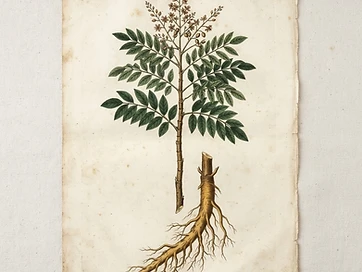
Eurycoma longifolia
Tongkat Ali
Simaroubaceae
Bitter, slightly woody

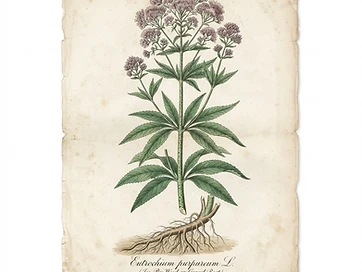
Eutrochium purpureum
Gravel Root
Asteraceae
Faint, hay-like, earthy


Hydrangea arborescens
Hydrangea Root
Hydrangeaceae
Mild, earthy, rooty