

Rehmannia glutinosa
Rehmannia
Scrophulariaceae
Identity
- Common Name
- Rehmannia
- Scientific Name
- Rehmannia glutinosa
- Botanical Family
- Scrophulariaceae
- Native Region
- China
- Cultivation Regions
- China, East Asia
- Plant Parts Used
- Root (raw or prepared)
- Synonyms
- Di Huang, Chinese Foxglove, Sheng Di Huang (raw), Shu Di Huang (prepared)
- Caffeine Level
- Caffeine Free
A leafy perennial with a basal rosette of large wrinkled green leaves, tall spikes of tubular reddish-purple foxglove-like flowers, and a thick orange-brown tuberous root. The root is the medicinal part.
Historical Background
A premier TCM 'yin-nourishing' tonic, rehmannia appears in classic formulas such as Liu Wei Di Huang Wan. Raw and wine-prepared forms serve different purposes.
Earliest recorded uses: Febrile illness with thirst, yin deficiency, and as a blood and essence tonic in TCM.
Cultural significance: Among the most prescribed tonics in modern Chinese medicine for aging, fatigue, and menopause-related patterns.
Classical TCM
Recorded in the Shennong Bencao Jing for blood and yin.
Song dynasty
Liu Wei Di Huang Wan codifies rehmannia as a yin tonic base.
Traditional preparations:
- Decoction
- Prepared (steamed) root for tonics
Traditional Uses
These uses document historical traditions and do not imply proven effectiveness.
Traditional Chinese Medicine
Prepared root decoction to nourish yin, blood, and essence; raw root for cooling heat and generating fluids.
Flavor & Aroma
Aroma: Earthy, rooty, slightly sweet
Tea Information
Safety & Cautions
Research Summary
Iridoid glycosides (catalpol) and acteoside are studied for anti-inflammatory and metabolic effects; clinical evidence for tonic outcomes is limited and mostly from TCM practice.
Evidence levels reflect the currently available scientific literature and may change as new research emerges. Where evidence is limited or conflicting, this is stated plainly.
References & Sources
References & Sources
- WHO · WHO Monographs on Selected Medicinal Plants (various)
Related Herbs

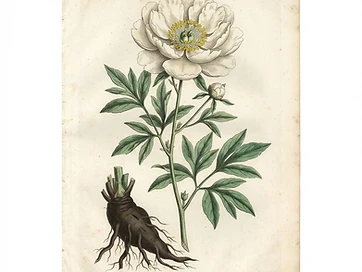
Paeonia lactiflora
White Peony
Paeoniaceae
Floral, sweet, slightly bitter, earthy


Angelica sinensis
Dong Quai
Apiaceae
Musky, earthy, sweet-bitter, aromatic

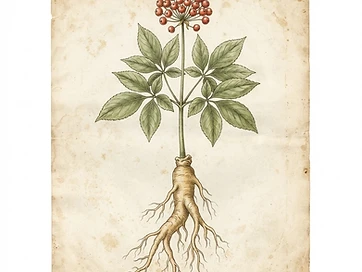
Panax ginseng
Asian Ginseng
Araliaceae
Earthy, sweet, slightly balsamic