


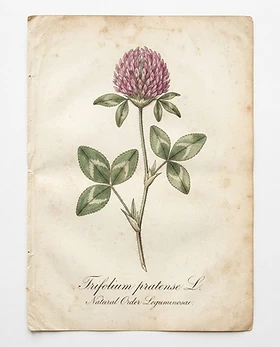
Trifolium pratense
Red Clover
Fabaceae
Identity
- Common Name
- Red Clover
- Scientific Name
- Trifolium pratense
- Botanical Family
- Fabaceae
- Native Region
- Europe, Asia, and North Africa
- Cultivation Regions
- Europe, Asia, temperate regions worldwide
- Plant Parts Used
- Flowers (blossoms)
- Synonyms
- Meadow Clover, Wild Clover, Purple Clover
- Caffeine Level
- Caffeine Free
A perennial with three rounded trifoliate green leaves marked with a pale chevron and globe-shaped magenta-pink flower heads; the flowers are used.
Historical Background
Red clover has been a European, Asian, and Native American folk herb for centuries, its sweet blossoms steeped into a gentle tea for skin, respiratory, and 'blood-cleansing' traditions. In the 20th century its isoflavones drew attention for menopausal traditions, and it remains a beloved, mild, caffeine-free cup.
Earliest recorded uses: European, Asian, and Native American traditions for centuries; a skin, respiratory, and 'blood-purifying' flower tea.
Traditional preparations:
- Blossom infusion
- Skin and respiratory tea
- Gentle isoflavone cup
Traditional Uses
These uses document historical traditions and do not imply proven effectiveness.
European Folk Traditions
Skin, respiratory, and 'blood-purifying' blossom tea.
Modern Herbalism
Gentle isoflavone (phytoestrogen) cup.
Flavor & Aroma
Aroma: Mild, sweet, floral, grassy
Tea Information
Safety & Cautions
Research Summary
Red clover has a tradition as a skin, respiratory, and 'blood-purifying' tea; modern interest focuses on isoflavones (phytoestrogens) for menopausal symptoms, with mixed clinical evidence. It is not a treatment for menopause, skin disease, cancer, or any disease, though it remains a gentle, popular, caffeine-free cup.
Evidence levels reflect the currently available scientific literature and may change as new research emerges. Where evidence is limited or conflicting, this is stated plainly.
References & Sources
Related Herbs


Cyclopia genistoides
Honeybush
Fabaceae
Sweet, honey-like, woody, floral


Astragalus membranaceus
Astragalus
Fabaceae
Sweet, earthy, bean-like, mild

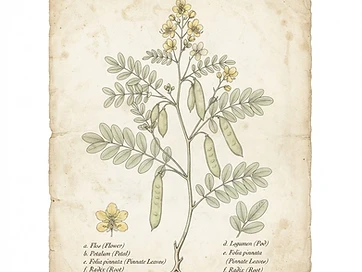
Senna alexandrina
Senna
Fabaceae
Mild, slightly sweet, grassy, faintly floral