
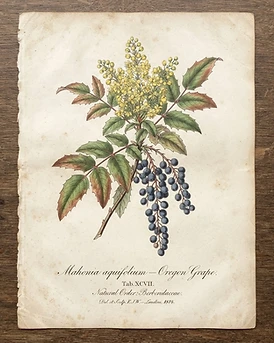
Mahonia aquifolium
Oregon Grape
Berberidaceae
Identity
- Common Name
- Oregon Grape
- Scientific Name
- Mahonia aquifolium
- Botanical Family
- Berberidaceae
- Native Region
- Western North America
- Cultivation Regions
- Pacific Northwest, western North America
- Plant Parts Used
- Root, Root bark
- Synonyms
- Oregon Grape Holly, Mountain Grape, Holly-Leaved Barberry
- Caffeine Level
- Caffeine Free
An evergreen shrub with glossy spiny holly-like pinnate green leaves, clusters of small bright yellow flowers, and dangling clusters of round blue-purple grape-like berries; the root and root bark are used (sometimes the leaf).
Historical Background
Oregon grape has been an Indigenous Pacific Northwest medicine for centuries, its bright yellow berberine-rich root used much like goldenseal for skin, liver, and infection. A sustainable native alternative to goldenseal, it remains a potent, bitter, practitioner-guided herb.
Earliest recorded uses: Indigenous Pacific Northwest traditions for centuries; a bitter yellow root for skin, liver, and infection.
Traditional preparations:
- Small-dose root infusion
- Bitter liver and skin tea
- Practitioner-guided use
Traditional Uses
These uses document historical traditions and do not imply proven effectiveness.
Indigenous North American Traditions
Bitter yellow root for skin, liver, and infection.
Modern Herbalism
Sustainable goldenseal alternative (short-term).
Flavor & Aroma
Aroma: Bitter, tart, slightly fruity, earthy
Tea Information
Safety & Cautions
Research Summary
Oregon grape has a tradition as a bitter liver, skin, and antimicrobial root; berberine shows antimicrobial and anti-inflammatory activity in vitro, and some topical use for psoriasis. Clinical evidence for internal tea is limited; it is not a treatment for psoriasis, liver disease, infection, or any disease, and its strong alkaloids warrant short-term, cautious use.
Evidence levels reflect the currently available scientific literature and may change as new research emerges. Where evidence is limited or conflicting, this is stated plainly.
References & Sources
Related Herbs


Hydrastis canadensis
Goldenseal
Ranunculaceae
Bitter, earthy, slightly astringent


Berberis vulgaris
Barberry
Berberidaceae
Sharp, resinous

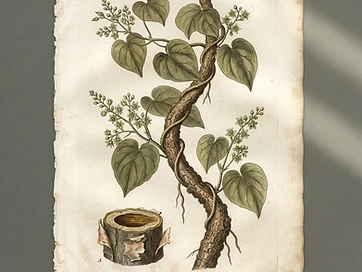
Tinospora cordifolia
Guduchi
Menispermaceae
Bitter, earthy, slightly starchy