
Citrus sinensis
Orange Peel
Rutaceae
Identity
- Common Name
- Orange Peel
- Scientific Name
- Citrus sinensis
- Botanical Family
- Rutaceae
- Native Region
- Southeast Asia (cultivated worldwide)
- Cultivation Regions
- Mediterranean, Florida, Brazil, China
- Plant Parts Used
- Peel (zest)
- Synonyms
- Sweet Orange Zest, Chen Pi, Aurantium Peel
- Caffeine Level
- Caffeine Free
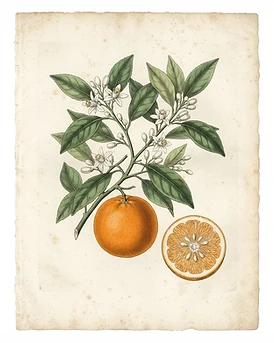
A small evergreen citrus tree with glossy oval pointed dark green leaves, small white fragrant flowers, and bright orange round fruit; the peel (zest) is the part used.
Historical Background
Orange peel has flavored Chinese, Mediterranean, and Persian drinks for millennia, prized for its sweet citrus zest. Aged bitter orange peel (chen pi) is a classic TCM digestive, and dried peel remains a cornerstone of warming, cold-season tea blends.
Earliest recorded uses: Used in Chinese, Mediterranean, and Persian traditions for millennia; both food and medicinal peel (chen pi).
Traditional preparations:
- Dried peel infusion
- Warming winter chai accent
- Digestive tea with ginger
Traditional Uses
These uses document historical traditions and do not imply proven effectiveness.
Traditional Chinese Medicine
Aged peel (chen pi) for digestion and qi; cold-season tea.
Modern Herbalism
Warming digestive and citrus tea accent.
Flavor & Aroma
Aroma: Sweet citrus, zesty, warm, slightly floral
Tea Information
Safety & Cautions
Research Summary
Orange peel is a rich source of flavonoids (hesperidin) and volatile oils. Clinical evidence for specific benefits is limited; it is not a treatment for digestive disorders, cold, or any disease, though it remains a popular, warming tea ingredient.
Evidence levels reflect the currently available scientific literature and may change as new research emerges. Where evidence is limited or conflicting, this is stated plainly.
References & Sources
Related Herbs


Citrus limon
Lemon Peel
Rutaceae
Bright, citrus, zesty, slightly sweet


Murraya koenigii
Curry Leaf
Rutaceae
Pungent, citrus-resinous

Citrus aurantium
Seville Orange
Rutaceae
Citrus, bitter-orange, floral, slightly spicy