
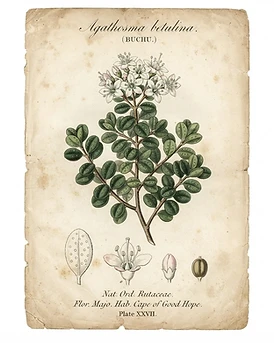
Agathosma betulina
Buchu
Rutaceae
Identity
- Common Name
- Buchu
- Scientific Name
- Agathosma betulina
- Botanical Family
- Rutaceae
- Native Region
- South Africa (Western Cape)
- Cultivation Regions
- South Africa
- Plant Parts Used
- Leaves
- Synonyms
- Round Leaf Buchu, Buchu Leaf, Diosma
- Caffeine Level
- Caffeine Free
A small fragrant evergreen shrub with glossy rounded leaves dotted with oil glands and small star-shaped white or pinkish flowers. The leaves carry a sharp blackcurrant-like scent.
Historical Background
A long-standing remedy of the Khoisan and other South African peoples for urinary and digestive complaints; later exported into European and Eclectic practice as a urinary antiseptic.
Earliest recorded uses: Urinary discomfort, bladder and kidney complaints, and as a digestive carminative.
Cultural significance: One of South Africa's best-known medicinal exports; once a key flavoring and urinary antiseptic in Western tinctures.
Indigenous
Khoisan peoples use buchu for urinary and skin complaints.
19th century
Adopted into European and Eclectic practice as a urinary antiseptic.
Traditional preparations:
- Leaf infusion
- Tincture
Traditional Uses
These uses document historical traditions and do not imply proven effectiveness.
African Traditions
Leaf infusion as a diuretic and urinary antiseptic for bladder discomfort.
Flavor & Aroma
Aroma: Sharp, fruity, herbaceous
Tea Information
Safety & Cautions
Research Summary
Diosphenol and other leaf oils are credited with antimicrobial and diuretic effects; modern clinical trials are lacking.
Evidence levels reflect the currently available scientific literature and may change as new research emerges. Where evidence is limited or conflicting, this is stated plainly.
References & Sources
References & Sources
- American Herbal Products Association · Botanical Safety Handbook (2013)
Related Herbs


Murraya koenigii
Curry Leaf
Rutaceae
Pungent, citrus-resinous


Agathosma betulina
Buchu
Rutaceae
Minty, peppery, slightly fruity, medicinal

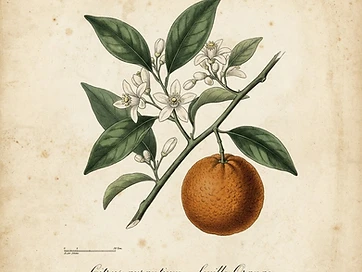
Citrus aurantium
Seville Orange
Rutaceae
Citrus, bitter-orange, floral, slightly spicy