
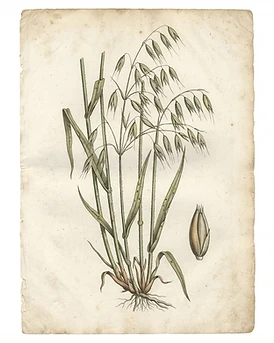
Avena sativa
Oatstraw
Poaceae
Identity
- Common Name
- Oatstraw
- Scientific Name
- Avena sativa
- Botanical Family
- Poaceae
- Native Region
- Temperate Eurasia
- Cultivation Regions
- Temperate regions worldwide
- Plant Parts Used
- Oat straw (green stem), Milky grain, Seeds
- Synonyms
- Milky Oats, Oat Straw, Common Oat
- Caffeine Level
- Caffeine Free
A tall annual grass with erect hollow culms, sheathing leaves, and a nodding open panicle of hanging oat spikelets; the young green plant and milky unripe grain are gathered for tea.
Historical Background
Oats and their green straw have been a European and Ayurvedic nervine and restorative for centuries, valued as a gentle, nourishing tonic for the nervous system, skin, and convalescence. The 19th-century Eclectic physicians championed 'milky oats' as a restorative for the overtaxed mind.
Earliest recorded uses: European and Ayurvedic traditions; milky oat was a 19th-century Eclectic nervine tonic.
Traditional preparations:
- Green straw long infusion
- Milky-oat tincture
- Oatstraw decoction
Traditional Uses
These uses document historical traditions and do not imply proven effectiveness.
Traditional European Herbalism
Nourishing nervine tonic for the overworked nervous system, convalescence, and skin.
Modern Herbalism
Restorative nervine and adaptogen; gentle stress support.
Flavor & Aroma
Aroma: Mild, sweet, hay-like, green
Tea Information
Safety & Cautions
Research Summary
Oat straw and milky oats have a long tradition as a gentle nervine tonic and skin herb. Clinical evidence is insufficient; modest preclinical work supports anti-inflammatory and soothing effects. It is not a treatment for anxiety or skin disease, and is considered very safe.
Evidence levels reflect the currently available scientific literature and may change as new research emerges. Where evidence is limited or conflicting, this is stated plainly.
References & Sources
Related Herbs


Zea mays
Cornsilk
Poaceae
Mild, sweet, grassy, slightly green


Elymus repens
Couch Grass
Poaceae
Fresh, hay-like, green

Borago officinalis
Borage
Boraginaceae
Mild, slightly cucumber-like, green, floral