


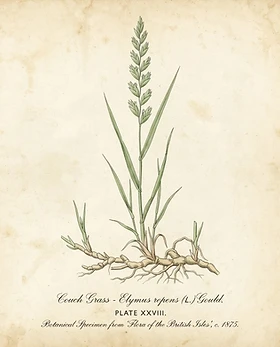
Elymus repens
Couch Grass
Poaceae
Identity
- Common Name
- Couch Grass
- Scientific Name
- Elymus repens
- Botanical Family
- Poaceae
- Native Region
- Europe and temperate Asia
- Cultivation Regions
- Worldwide temperate (often a weed)
- Plant Parts Used
- Rhizome (root)
- Synonyms
- Quackgrass, Triticum repens, Agropyron repens, Dog Grass
- Caffeine Level
- Caffeine Free
A common grass with long narrow green blades, a flat spike of alternating seedlets, and an extensive creeping rhizome — the medicinal part, long valued as a soothing urinary demulcent.
Historical Background
Used in European herbalism since antiquity as a gentle, soothing urinary tonic; Hippocrates and later Eclectic physicians recommended it for bladder and kidney irritation.
Earliest recorded uses: Bladder and kidney discomfort, urinary soothing, and as a mild diuretic.
Cultural significance: A ubiquitous 'weed' valued as a softening, demulcent root tea in cottage and clinical practice alike.
Classical
Greek physicians note couch grass root for urinary complaints.
19th century
Eclectic and European herbalists use the decoction for bladder soothing.
Traditional preparations:
- Decoction (long simmer)
- Cold maceration
Traditional Uses
These uses document historical traditions and do not imply proven effectiveness.
Traditional European Herbalism
Long decoction of washed rhizome as a soothing demulcent for urinary tract irritation and as a gentle diuretic.
Flavor & Aroma
Aroma: Fresh, hay-like, green
Tea Information
Safety & Cautions
Research Summary
Mucilage (triticin) and silicates account for the demulcent urinary tradition; clinical evidence is limited.
Evidence levels reflect the currently available scientific literature and may change as new research emerges. Where evidence is limited or conflicting, this is stated plainly.
References & Sources
References & Sources
- American Botanical Council · Expanded Commission E Monographs (2000)
Related Herbs

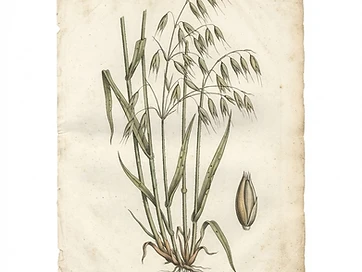
Avena sativa
Oatstraw
Poaceae
Mild, sweet, hay-like, green

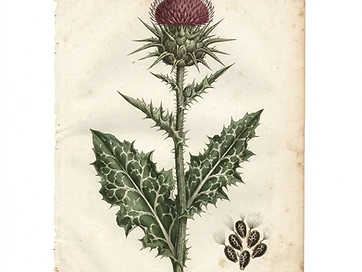
Silybum marianum
Milk Thistle
Asteraceae
Mild, slightly nutty, earthy, green


Zea mays
Cornsilk
Poaceae
Mild, sweet, grassy, slightly green