
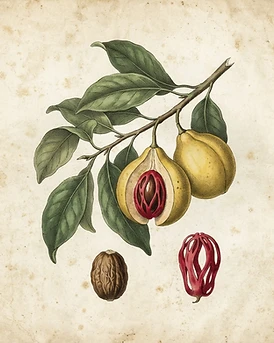
Myristica fragrans
Nutmeg
Myristicaceae
Identity
- Common Name
- Nutmeg
- Scientific Name
- Myristica fragrans
- Botanical Family
- Myristicaceae
- Native Region
- Banda Islands (Maluku), Indonesia
- Cultivation Regions
- Indonesia (Banda Islands), Grenada, India, Sri Lanka
- Plant Parts Used
- Seed (nutmeg), Aril (mace)
- Synonyms
- Myristica, Jatiphala, Bandan Nut
- Caffeine Level
- Caffeine Free
An evergreen tropical tree with leathery oval leaves; the ripe fruit splits to reveal a shiny brown oval nutmeg seed wrapped in a red lacy aril (mace). Both seed and aril are dried as spice.
Historical Background
Native to the Banda Islands of Indonesia, nutmeg was one of the most prized spices of the medieval and early modern world, driving colonial rivalries for control of its tiny island home. In Ayurveda and medieval European medicine it was a warming digestive and sleep comfort spice, used in tiny amounts in milky bedtime teas.
Earliest recorded uses: Indian and Arab medicine for centuries; a prized spice in medieval European trade — the Banda Islands were the world's sole source.
Traditional preparations:
- Freshly grated infusion
- Golden milk bedtime tea
- Chai spice blend
Traditional Uses
These uses document historical traditions and do not imply proven effectiveness.
Ayurveda
Warming digestive, sleep comfort, and aphrodisiac in small amounts.
Traditional European Herbalism
Warming digestive spice and medieval luxury.
Modern Herbalism
Comfort spice for evening milky teas.
Flavor & Aroma
Aroma: Warm, sweet, woody, spicy
Tea Information
Safety & Cautions
Research Summary
Nutmeg has a long tradition as a warming digestive and sleep-comfort spice. Clinical evidence is limited; larger doses are toxic due to myristicin. It is not a treatment for digestive disease, insomnia, or any condition, and should be used only in small culinary amounts.
Evidence levels reflect the currently available scientific literature and may change as new research emerges. Where evidence is limited or conflicting, this is stated plainly.
References & Sources
Related Herbs

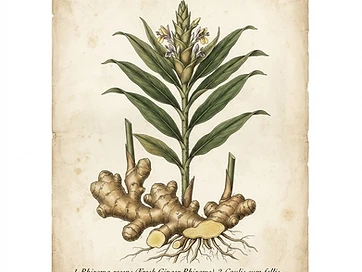
Zingiber officinale
Ginger
Zingiberaceae
Warm, pungent, citrusy-spicy.

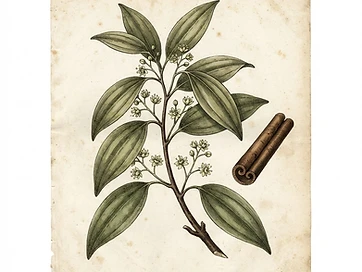
Cinnamomum verum
Cinnamon
Lauraceae
Sweet, warm, woody-spicy


Illicium verum
Star Anise
Schisandraceae
Sweet, licorice-anise, warm