
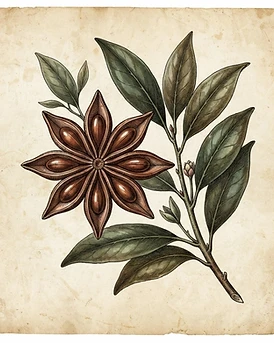
Illicium verum
Star Anise
Schisandraceae
Identity
- Common Name
- Star Anise
- Scientific Name
- Illicium verum
- Botanical Family
- Schisandraceae
- Native Region
- China and Vietnam
- Cultivation Regions
- China, Vietnam, Laos, Japan
- Plant Parts Used
- Fruit (star pods), Seeds
- Synonyms
- Chinese Star Anise, Badian Anise, Bajiao
- Caffeine Level
- Caffeine Free
An evergreen tree 8-15 m tall with leathery, glossy, lance-shaped leaves in whorls, and distinctive star-shaped, woody, eight-pointed fruits (pods), each point holding a glossy amber seed. The dried fruits are the spice.
Historical Background
Star anise has been a cornerstone of Chinese cuisine and medicine for over a millennium, prized for its sweet anise fragrance and warming, digestive reputation. It entered the European pharmacopoeia via trade routes and famously became the industrial source of shikimic acid for manufacturing the influenza drug oseltamivir (Tamiflu).
Earliest recorded uses: Recorded in Chinese herbals for over a thousand years; the source plant of shikimic acid used to make the antiviral oseltamivir.
Traditional preparations:
- Crushed pod infusion
- Five-spice tea
- Decoction
Traditional Uses
These uses document historical traditions and do not imply proven effectiveness.
Traditional Chinese Medicine
Warming digestive, carminative, and cold-season comfort spice.
Modern Herbalism
Digestive and respiratory comfort spice tea.
Flavor & Aroma
Aroma: Sweet, licorice-anise, warm
Tea Information
Safety & Cautions
Research Summary
Star anise has a long tradition as a warming digestive and carminative. Its shikimic acid content is industrially important, but the spice itself has limited clinical evidence for its traditional tea uses. It is not a treatment for influenza or any disease.
Evidence levels reflect the currently available scientific literature and may change as new research emerges. Where evidence is limited or conflicting, this is stated plainly.
References & Sources
Related Herbs

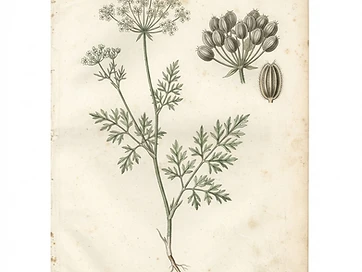
Pimpinella anisum
Anise
Apiaceae
Sweet, licorice-like, warm, aromatic


Schisandra chinensis
Schisandra
Schisandraceae
Tart, fruity, complex


Foeniculum vulgare
Fennel
Apiaceae
Sweet, anise, licorice-like