
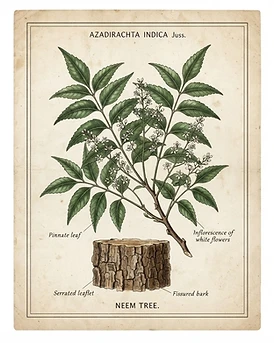
Azadirachta indica
Neem
Meliaceae
Identity
- Common Name
- Neem
- Scientific Name
- Azadirachta indica
- Botanical Family
- Meliaceae
- Native Region
- South Asia
- Cultivation Regions
- South Asia, tropics
- Plant Parts Used
- Leaves, Bark
- Synonyms
- Margosa, Indian Lilac, Nimba
- Caffeine Level
- Caffeine Free
A tropical evergreen tree with pinnate compound glossy deep-green serrated leaflets and small sprays of tiny white fragrant flowers; the leaves and bark are used.
Historical Background
Neem has been an Ayurvedic 'village pharmacy' for millennia, its bitter leaves and bark used for skin, immune, fever, and cleansing traditions. Revered across South Asia, it is rarely a casual sip but features in practitioner-guided Ayurvedic teas and bitter tonics.
Earliest recorded uses: Ayurvedic traditions for millennia; a bitter 'village pharmacy' tree for skin, immune, and fever traditions.
Traditional preparations:
- Small-dose leaf infusion
- Bitter Ayurvedic tonic
- Practitioner-guided cup
Traditional Uses
These uses document historical traditions and do not imply proven effectiveness.
Ayurvedic Traditions
Bitter 'village pharmacy' for skin, immune, and fever.
Modern Herbalism
Bitter antimicrobial and cleansing cup.
Flavor & Aroma
Aroma: Bitter, strong, sulfur-like, herbaceous
Tea Information
Safety & Cautions
Research Summary
Neem has a tradition as a bitter antimicrobial, skin, immune, and blood-sugar herb; preclinical work shows broad antimicrobial, anti-inflammatory, and modest glucose-modulating activity. Clinical evidence is insufficient; it is not a treatment for infection, skin disease, diabetes, malaria, or any disease, and its strong, bitter compounds warrant short, cautious use.
Evidence levels reflect the currently available scientific literature and may change as new research emerges. Where evidence is limited or conflicting, this is stated plainly.
References & Sources
Related Herbs


Trichilia catigua
Catuaba
Meliaceae
Earthy, bittersweet bark

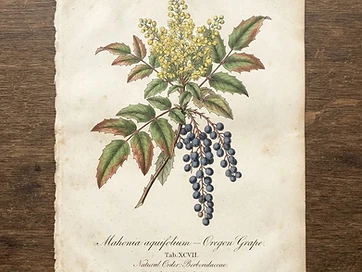
Mahonia aquifolium
Oregon Grape
Berberidaceae
Bitter, tart, slightly fruity, earthy

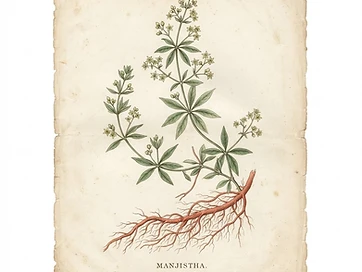
Rubia cordifolia
Manjistha
Rubiaceae
Earthy, slightly bitter, herbaceous