

Acer saccharum
Maple Leaf
Sapindaceae
Identity
- Common Name
- Maple Leaf
- Scientific Name
- Acer saccharum
- Botanical Family
- Sapindaceae
- Native Region
- North America and East Asia
- Cultivation Regions
- North America, East Asia, temperate regions
- Plant Parts Used
- Leaves
- Synonyms
- Sugar Maple, Hard Maple
- Caffeine Level
- Caffeine Free
A deciduous tree with five-lobed palmate green leaves turning golden in autumn, paired winged samara fruits, and deeply furrowed gray-brown bark; the leaves (and sap) are used.
Historical Background
Maple leaf has been an Indigenous North American and East Asian folk tea for centuries, the leaves steeped into a mild, slightly sweet brew, while the tree's sap gives maple syrup. In Korean tradition, certain maple leaves are even used to infuse flavored rice wines, and the leaf tea remains a gentle caffeine-free cup.
Earliest recorded uses: Indigenous North American and East Asian traditions for centuries; a leaf tea and the source of maple sap and syrup.
Traditional preparations:
- Leaf infusion
- Spring tonic tea
- Mild antioxidant cup
Traditional Uses
These uses document historical traditions and do not imply proven effectiveness.
Indigenous North American Traditions
Mild liver and antioxidant leaf tea.
Modern Herbalism
Gentle autumn antioxidant cup.
Flavor & Aroma
Aroma: Mild, sweet, woody, slightly earthy
Tea Information
Safety & Cautions
Research Summary
Maple leaf has a tradition as a mild antioxidant and liver-support tea; preclinical work shows polyphenol antioxidant activity, especially in Japanese red maple varieties. Clinical evidence is limited; it is not a treatment for liver disease, diabetes, or any disease, though it remains a gentle, pleasant autumn cup.
Evidence levels reflect the currently available scientific literature and may change as new research emerges. Where evidence is limited or conflicting, this is stated plainly.
References & Sources
Related Herbs
Dimocarpus longan
Longan
Sapindaceae
Sweet, fruity, delicately floral

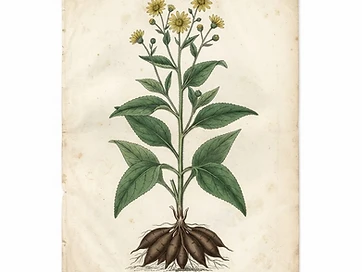
Smallanthus sonchifolius
Yacon
Asteraceae
Sweet, mild, slightly earthy, fresh


Hamamelis virginiana
Witch Hazel
Hamamelidaceae
Mild, astringent, woody, slightly warm