
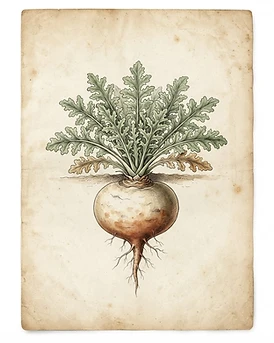
Lepidium meyenii
Maca
Brassicaceae
Identity
- Common Name
- Maca
- Scientific Name
- Lepidium meyenii
- Botanical Family
- Brassicaceae
- Native Region
- High Andes of Peru
- Cultivation Regions
- Peru, Bolivia
- Plant Parts Used
- Root (hypocotyl)
- Synonyms
- Peruvian Ginseng, Maca Root
- Caffeine Level
- Caffeine Free
A low-growing biennial rosette surviving above 4,000 m, with frilly, mat-like leaves close to the ground and a fleshy, turnip-shaped taproot in cream, yellow, red, or purple. The root is the edible and medicinal part and tolerates frost, wind, and thin mountain soils that few crops survive.
Historical Background
Maca has been cultivated in the Junín plateau of the central Andes for at least 2,000 years and was a staple of Inca warriors, who, by tradition, ate it before campaigns for strength. It remained a local highland food until the late 20th century, when it was marketed globally as a 'Peruvian ginseng' for energy and libido.
Earliest recorded uses: Domesticated in the Andes ~2,000 years ago; noted by Spanish chroniclers in the 16th century as a staple and fertility food.
Cultural significance: Maca is a cultural symbol of Andean agriculture, adapted to extreme altitude where almost nothing else grows; Peru recognizes it as a heritage crop and has contested foreign patents on maca-derived products as biopiracy.
~2,000 years ago
Domesticated in the central Andes.
16th c.
Spanish chroniclers record maca as a highland staple and fertility food.
1990s+
Marketed internationally as 'Peruvian ginseng.'
Traditional preparations:
- Dried and cooked root (traditional)
- Gelatinized powder
- Infusions
Traditional Uses
These uses document historical traditions and do not imply proven effectiveness.
Indigenous Traditions
Andean peoples eat the root for energy, stamina, and fertility at altitude.
Modern Herbalism
Marketed for energy, libido, and mood; studied as an adaptogen.
Flavor & Aroma
Aroma: Earthy, slightly caramelized
Tea Information
Safety & Cautions
Research Summary
Maca root is studied for energy, libido, and mood. A small number of trials in men report modest improvements in subjective energy and sexual desire, but evidence is limited, studies are small, and effects on testosterone are not established. Maca is best understood as a nutritious highland food rather than a proven treatment for sexual dysfunction or low testosterone.
Evidence levels reflect the currently available scientific literature and may change as new research emerges. Where evidence is limited or conflicting, this is stated plainly.
References & Sources
Related Herbs


Nasturtium officinale
Watercress
Brassicaceae
Peppery, fresh, green, slightly mustard-like


Mucuna pruriens
Mucuna
Fabaceae
Earthy, nutty, slightly bitter

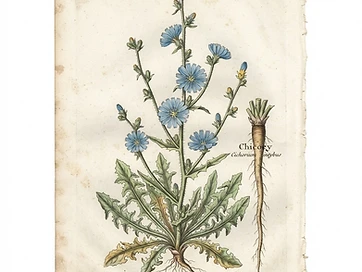
Cichorium intybus
Chicory
Asteraceae
Roasted, nutty, earthy, bitter