
Piper methysticum
Kava
Piperaceae
Identity
- Common Name
- Kava
- Scientific Name
- Piper methysticum
- Botanical Family
- Piperaceae
- Native Region
- South Pacific islands (Vanuatu, Fiji)
- Cultivation Regions
- Fiji, Vanuatu, Samoa, Tonga
- Plant Parts Used
- Root, Rhizome
- Synonyms
- Awa, Yaqona, Kava-Kava
- Caffeine Level
- Caffeine Free
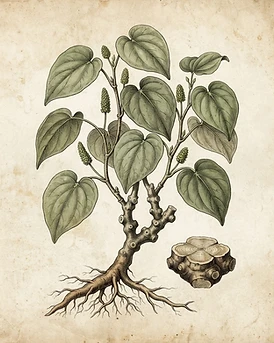
A leafy shrub with large heart-shaped veined green leaves on long stalks, knobby jointed stems, and small greenish flower spikes; the thick knobby root is the part used ceremonially.
Historical Background
Kava (ʻawa, yaqona) has been the ceremonial heart of Pacific Island cultures for millennia, drunk in coconut shells to mark welcome, reconciliation, and community. Brewed by chewing or pounding the root, its earthy, numbing cup is both a social sacrament and a relaxing evening drink.
Earliest recorded uses: Pacific Island (Fijian, Vanuatuan, Samoan, Tongan) ceremonial use for millennia; a sacred social and reconciliation drink.
Traditional preparations:
- Pounded root in water
- Kava ceremony bowl
- Cream-infused kava drink
Traditional Uses
These uses document historical traditions and do not imply proven effectiveness.
Pacific Island Traditions
Ceremonial social, welcome, and relaxation drink.
Modern Herbalism
Relaxing nervine for stress and social ease (short-term).
Flavor & Aroma
Aroma: Earthy, peppery, slightly bitter, creamy
Tea Information
Safety & Cautions
Research Summary
Kava has moderate short-term evidence for reducing anxiety, but rare serious liver injury has been reported, prompting regulatory caution. It is not a treatment for anxiety or insomnia and should be used only short-term, liver-healthy, and ideally with clinician guidance.
Evidence levels reflect the currently available scientific literature and may change as new research emerges. Where evidence is limited or conflicting, this is stated plainly.
References & Sources
Related Herbs

Humulus lupulus
Hops
Cannabaceae
Floral, resinous, earthy, slightly bitter


Verbena hastata
Blue Vervain
Verbenaceae
Herbal, slightly bitter, green, earthy

Passiflora incarnata
Passionflower
Passifloraceae
Fresh, green, mild