
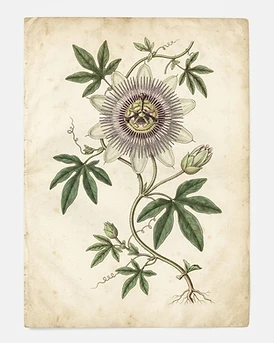
Passiflora incarnata
Passionflower
Passifloraceae
Identity
- Common Name
- Passionflower
- Scientific Name
- Passiflora incarnata
- Botanical Family
- Passifloraceae
- Native Region
- Southeastern United States and Central America
- Cultivation Regions
- North America, Central America, Europe
- Plant Parts Used
- Aerial parts (leaves, stems, flowers)
- Synonyms
- Maypop, Apricot Vine
- Caffeine Level
- Caffeine Free
A climbing vine with deeply lobed, three-fingered leaves, curling tendrils, and large, intricate round flowers with a crown of fine purple-and-white filaments over five petals, followed by edible oval fruits (maypops). The aerial parts are medicinal.
Historical Background
Passionflower was used by Indigenous peoples of the southeastern US as a calming remedy and was adopted by eclectic physicians in the 19th century for anxiety and insomnia. Its elaborate flower was named by Spanish missionaries who saw symbols of the Passion of Christ in its structure.
Earliest recorded uses: Indigenous North American use for anxiety and wounds; adopted by European physicians by the 1840s.
Cultural significance: The flower's anatomy was read as a religious emblem by 16th-century missionaries — a fusion of botany and devotion that gave the plant its name and spread its cultivation worldwide.
Traditional preparations:
- Aerial part infusion
- Tincture
Traditional Uses
These uses document historical traditions and do not imply proven effectiveness.
Indigenous Traditions
Used for nervous anxiety and restlessness.
Modern Herbalism
Taken for anxiety, stress, and sleep.
Flavor & Aroma
Aroma: Fresh, green, mild
Tea Information
Safety & Cautions
Research Summary
Passionflower has been studied for anxiety and sleep, with some small trials suggesting modest benefit for generalized anxiety and improved sleep quality, but evidence is limited and studies are small. It is not a treatment for anxiety disorders.
Evidence levels reflect the currently available scientific literature and may change as new research emerges. Where evidence is limited or conflicting, this is stated plainly.
References & Sources
Related Herbs


Prunella vulgaris
Self-Heal
Lamiaceae
Mild, slightly bitter, green, earthy


Scutellaria baicalensis
Baikal Skullcap
Lamiaceae
Mild, slightly bitter, green, earthy


Cynara cardunculus
Artichoke Leaf
Asteraceae
Mild, slightly bitter, green, earthy