


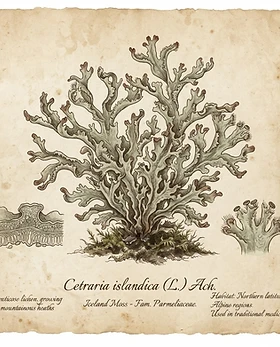
Cetraria islandica
Iceland Moss
Parmeliaceae
Identity
- Common Name
- Iceland Moss
- Scientific Name
- Cetraria islandica
- Botanical Family
- Parmeliaceae
- Native Region
- Arctic and subarctic regions of Europe and North America
- Cultivation Regions
- Iceland, Scandinavia, Northern regions (wild-harvested)
- Plant Parts Used
- Whole lichen (thallus)
- Synonyms
- Iceland Lichen, Cetraria
- Caffeine Level
- Caffeine Free
Not a moss but a fruticose lichen: a low clump of branching strap-like lobes with curled edges, grayish-green above with brownish undersides. Bitter and demulcent, long brewed for chest and stomach.
Historical Background
A survival food and medicine of Iceland, Scandinavia, and northern peoples, used for cough, chest complaints, and weak digestion; later adopted into European pharmacy as a demulcent and bitter tonic.
Earliest recorded uses: Cough, sore throat, loss of appetite, and as a nourishing food in scarcity.
Cultural significance: A symbol of northern resilience; ground into flour and brewed as a sustaining tea in times of famine.
Medieval
Northern Europeans use Iceland moss for chest and digestive complaints.
Modern
Listed in European pharmacopeias as a demulcent and bitter tonic.
Traditional preparations:
- Decoction
- Cold infusion (then warmed)
- Ground into gruel
Traditional Uses
These uses document historical traditions and do not imply proven effectiveness.
Traditional European Herbalism
Decoction for cough, sore throat, and appetite loss; also as a nourishing food.
Flavor & Aroma
Aroma: Earthy, mineral, faintly green
Tea Information
Safety & Cautions
Research Summary
Mucilage (lichenin) gives demulcent effects; usnic and other lichen acids have antimicrobial interest. Clinical evidence is limited.
Evidence levels reflect the currently available scientific literature and may change as new research emerges. Where evidence is limited or conflicting, this is stated plainly.
References & Sources
References & Sources
- American Botanical Council · Expanded Commission E Monographs (2000)
Related Herbs

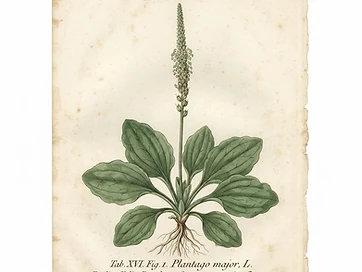
Plantago major
Plantain
Plantaginaceae
Faint green and mineral

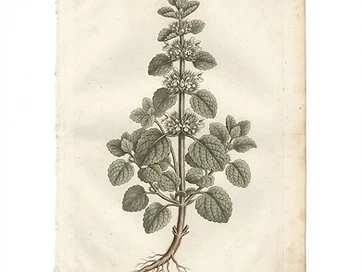
Marrubium vulgare
Horehound
Lamiaceae
Bitter, earthy, menthol-like, herbaceous


Thymus vulgaris
Thyme
Lamiaceae
Strong, herbaceous, thymol