
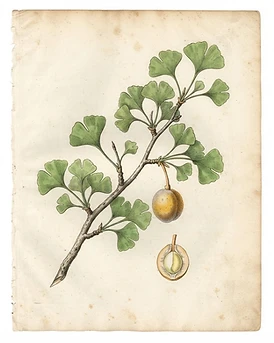
Ginkgo biloba
Ginkgo
Ginkgoaceae
Identity
- Common Name
- Ginkgo
- Scientific Name
- Ginkgo biloba
- Botanical Family
- Ginkgoaceae
- Native Region
- China
- Cultivation Regions
- China, Japan, Korea, Europe, North America (ornamental)
- Plant Parts Used
- Leaves
- Synonyms
- Maidenhair Tree, Yin Xing, Fossil Tree
- Caffeine Level
- Caffeine Free
A large ancient deciduous tree with distinctive fan-shaped bright green leaves with radiating veins turning golden in autumn, and small plum-like yellow-orange seeds with a kernel; the leaves are the part used.
Historical Background
Ginkgo is a 'living fossil' — the last survivor of an ancient plant family — and a sacred tree of Chinese and Japanese temples. Its fan-shaped leaves brew a mild tea traditionally associated with circulation and memory, and ginkgo leaf extract is among the most studied herbal preparations.
Earliest recorded uses: Used in Chinese medicine for millennia; a 'living fossil' tree; leaf tea for circulation traditions.
Traditional preparations:
- Leaf infusion
- Circulation tea with gotu kola
- Calming green blend
Traditional Uses
These uses document historical traditions and do not imply proven effectiveness.
Traditional Chinese Medicine
Temple tree of longevity; leaf tea for circulation and memory.
Modern Herbalism
Circulation and vitality tea.
Flavor & Aroma
Aroma: Mild, slightly nutty, green, faintly sweet
Tea Information
Safety & Cautions
Research Summary
Ginkgo leaf extract has conflicting evidence for cognition and circulation; large trials (e.g., GEM) found no clear benefit for memory in older adults. It is not a treatment for dementia, tinnitus, PAD, or any disease, and may increase bleeding risk; discuss with a clinician.
Evidence levels reflect the currently available scientific literature and may change as new research emerges. Where evidence is limited or conflicting, this is stated plainly.
References & Sources
Related Herbs

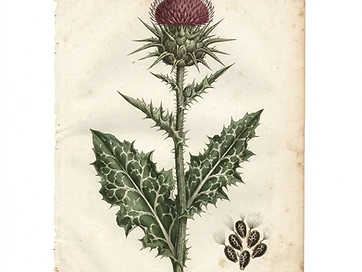
Silybum marianum
Milk Thistle
Asteraceae
Mild, slightly nutty, earthy, green


Crataegus monogyna
Hawthorn
Rosaceae
Mild, slightly tart, fruity, green

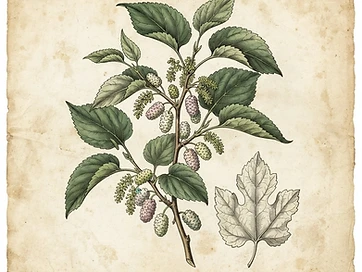
Morus alba
White Mulberry Leaf
Moraceae
Mild, slightly sweet, green, earthy