
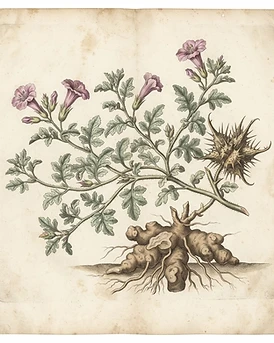
Harpagophytum procumbens
Devil's Claw
Pedaliaceae
Identity
- Common Name
- Devil's Claw
- Scientific Name
- Harpagophytum procumbens
- Botanical Family
- Pedaliaceae
- Native Region
- Southern Africa (Kalahari)
- Cultivation Regions
- Namibia, Botswana, South Africa, Kalahari
- Plant Parts Used
- Secondary roots (tubers)
- Synonyms
- Harpagophytum, Grapple Plant, Wood Spider
- Caffeine Level
- Caffeine Free
A low creeping plant with lobed grey-green leaves, trumpet-shaped pink-purple flowers, and a distinctive spiny clawed fruit capsule; the large tuberous secondary roots are the part used.
Historical Background
Devil's claw (harpagophytum) is a Kalahari plant named for its spiny clawed fruit, used for generations by Indigenous Khoisan peoples of southern Africa for joint and digestive comfort. Its tuberous roots became a respected herbal remedy worldwide for occasional joint use.
Earliest recorded uses: Indigenous Khoisan and southern African traditions for digestive and joint comfort for centuries.
Traditional preparations:
- Root decoction
- Joint-comfort tea
- Bitter digestive tea
Traditional Uses
These uses document historical traditions and do not imply proven effectiveness.
Indigenous African Traditions
Joint and digestive comfort; Kalahari folk tonic.
Modern Herbalism
Joint-comfort and bitter tonic tea.
Flavor & Aroma
Aroma: Earthy, bitter, slightly smoky
Tea Information
Safety & Cautions
Research Summary
Devil's claw has a tradition for joint and back comfort; some small trials suggest modest benefit for low-back pain, but evidence quality is limited and mixed. It is not a treatment for arthritis or pain and should be discussed with a clinician, especially with other medications.
Evidence levels reflect the currently available scientific literature and may change as new research emerges. Where evidence is limited or conflicting, this is stated plainly.
References & Sources
Related Herbs


Hydrastis canadensis
Goldenseal
Ranunculaceae
Bitter, earthy, slightly astringent

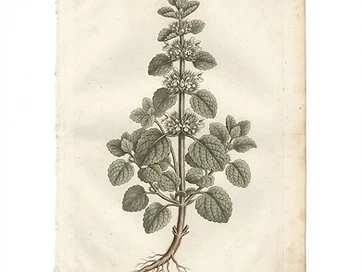
Marrubium vulgare
Horehound
Lamiaceae
Bitter, earthy, menthol-like, herbaceous


Ballota nigra
Black Horehound
Lamiaceae
Strong, unpleasant, herbaceous