
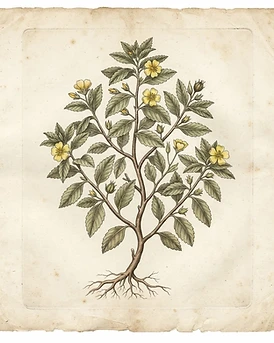
Turnera diffusa
Damiana
Passifloraceae
Identity
- Common Name
- Damiana
- Scientific Name
- Turnera diffusa
- Botanical Family
- Passifloraceae
- Native Region
- Mexico, Central America, and the Caribbean
- Cultivation Regions
- Mexico, Central America, Texas, Caribbean
- Plant Parts Used
- Leaves, Aerial parts
- Synonyms
- Mexican Damiana, Turnera, Old Woman's Broom
- Caffeine Level
- Caffeine Free
A small aromatic shrub 0.5-2 m tall with toothed ovate leaves, small yellow five-petalled flowers, and a woody branching stem; the leaves and stems are dried for tea.
Historical Background
Damiana has been used in Mexican, Maya, and Aztec traditions for centuries as a mood, vitality, and romance tonic. Its aromatic leaves were fermented into a liqueur still enjoyed today, and brewed into a sweet, warming tea prized in Central American culture.
Earliest recorded uses: Mexican and Maya traditions; adopted into 19th-century Eclectic medicine as a tonic and aphrodisiac.
Traditional preparations:
- Leaf infusion
- Damiana liqueur (traditional)
- Mood blends with rose & cinnamon
Traditional Uses
These uses document historical traditions and do not imply proven effectiveness.
Mexican & Maya Traditions
Mood, vitality, and romantic tonic; relaxing aromatic tea.
Modern Herbalism
Nervine tonic and aphrodisiac tradition.
Flavor & Aroma
Aroma: Sweet, aromatic, herbal, slightly spicy
Tea Information
Safety & Cautions
Research Summary
Damiana has a long tradition as a mood and romantic tonic. Clinical evidence is insufficient; small preclinical studies suggest possible effects on mood and libido, but it is not a treatment for sexual dysfunction, depression, or any condition.
Evidence levels reflect the currently available scientific literature and may change as new research emerges. Where evidence is limited or conflicting, this is stated plainly.
References & Sources
Related Herbs

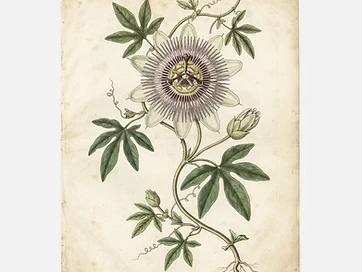
Passiflora incarnata
Passionflower
Passifloraceae
Fresh, green, mild

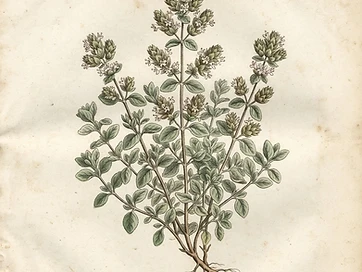
Origanum majorana
Marjoram
Lamiaceae
Warm, aromatic, slightly spicy, green

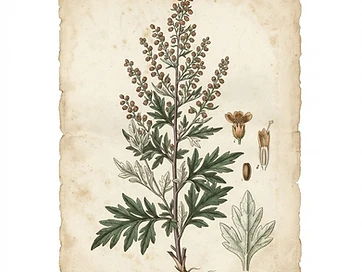
Artemisia vulgaris
Mugwort
Asteraceae
Herbal, slightly bitter, aromatic, green