
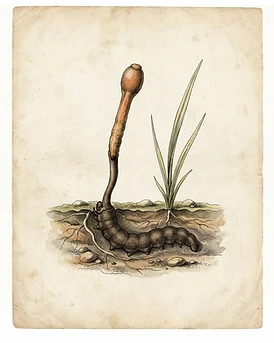
Cordyceps sinensis
Cordyceps
Cordycipitaceae
Identity
- Common Name
- Cordyceps
- Scientific Name
- Cordyceps sinensis
- Botanical Family
- Cordycipitaceae
- Native Region
- Tibetan Plateau and Himalayan meadows
- Cultivation Regions
- Tibet, China, Nepal, Bhutan (wild & cultivated)
- Plant Parts Used
- Fruiting body, Mycelium (CS-4)
- Synonyms
- Yartsa Gunbu, Dong Chong Xia Cao, Caterpillar Fungus
- Caffeine Level
- Caffeine Free
A parasitic fungus whose club-shaped orange-brown fruiting body emerges from the head of an infected caterpillar larva buried in alpine soil; cultivated substitutes (CS-4 mycelium) are now common.
Historical Background
Revered in Tibetan and Chinese medicine for over 600 years, cordyceps (yartsa gunbu, 'summer grass winter worm') is a curious fungus growing from caterpillar larvae on high Himalayan meadows. Prized as a vitality and stamina tonic, it became a luxury of Chinese imperial medicine.
Earliest recorded uses: Recorded in Tibetan and Chinese medicine from the 15th century; a prized TCM lung and kidney tonic.
Traditional preparations:
- Fruiting body decoction
- Stamina soup with chicken
- Dual extract (off-tea)
Traditional Uses
These uses document historical traditions and do not imply proven effectiveness.
Traditional Chinese Medicine
Tonifies Kidney Yang and Lungs; stamina and respiratory tonic.
Modern Herbalism
Performance and adaptogen tonic.
Flavor & Aroma
Aroma: Earthy, mushroom-like, slightly sweet, savory
Tea Information
Safety & Cautions
Research Summary
Cordyceps has a tradition as a stamina, lung, and kidney tonic. Clinical evidence is limited; small trials suggest possible exercise and respiratory benefits, but it is not a treatment for athletic performance, fatigue, COPD, or any disease.
Evidence levels reflect the currently available scientific literature and may change as new research emerges. Where evidence is limited or conflicting, this is stated plainly.
References & Sources
Related Herbs


Trametes versicolor
Turkey Tail
Polyporaceae
Earthy, mild, mushroom-like, slightly woody

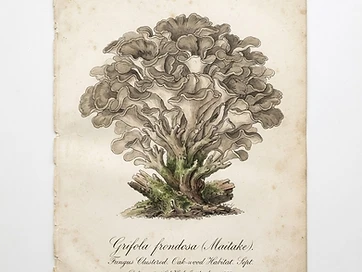
Grifola frondosa
Maitake
Meripilaceae
Deep, foresty, mushroom

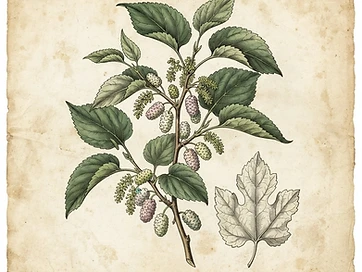
Morus alba
White Mulberry Leaf
Moraceae
Mild, slightly sweet, green, earthy