
Codonopsis pilosula
Codonopsis
Campanulaceae
Identity
- Common Name
- Codonopsis
- Scientific Name
- Codonopsis pilosula
- Botanical Family
- Campanulaceae
- Native Region
- China and East Asia
- Cultivation Regions
- China, Korea, Japan
- Plant Parts Used
- Root
- Synonyms
- Dang Shen, Poor Man's Ginseng, Bonnet Bellflower
- Caffeine Level
- Caffeine Free
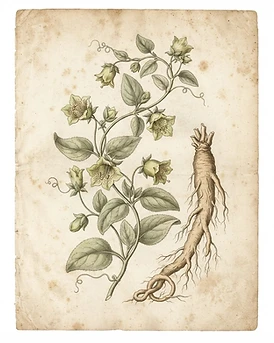
A twining perennial with ovate soft hairy leaves, pale greenish-yellow bell-shaped flowers with maroon spotting inside, and a long thick fleshy sweet root — the part used, and often a ginseng substitute.
Historical Background
Codonopsis (dang shen) is the 'poor man's ginseng' of Traditional Chinese Medicine, used for centuries as a gentler, more affordable Qi tonic. Its sweet, mild root is simmered into nourishing soups and teas, often replacing ginseng in daily formulas for vitality and digestion.
Earliest recorded uses: Used in TCM for centuries; called 'poor man's ginseng' (dang shen) for its gentle Qi-tonifying action.
Traditional preparations:
- Root decoction
- Qi soup with jujube & astragalus
- Gentle daily tonic
Traditional Uses
These uses document historical traditions and do not imply proven effectiveness.
Traditional Chinese Medicine
Tonifies Spleen and Lung Qi, generates fluids; gentler than ginseng.
Modern Herbalism
Gentle adaptogen and vitality tonic.
Flavor & Aroma
Aroma: Sweet, mild, slightly earthy, herbal
Tea Information
Safety & Cautions
Research Summary
Codonopsis has a TCM tradition as a gentle Qi and adaptogen tonic, often used like ginseng. Clinical evidence is limited; preclinical work shows antioxidant and immunomodulatory activity, but it is not a treatment for fatigue, cancer, or any disease.
Evidence levels reflect the currently available scientific literature and may change as new research emerges. Where evidence is limited or conflicting, this is stated plainly.
References & Sources
Related Herbs


Astragalus membranaceus
Astragalus
Fabaceae
Sweet, earthy, bean-like, mild

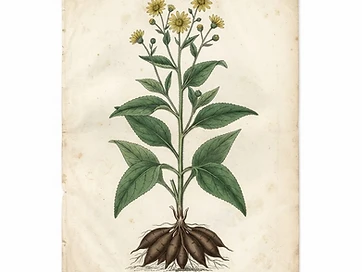
Smallanthus sonchifolius
Yacon
Asteraceae
Sweet, mild, slightly earthy, fresh

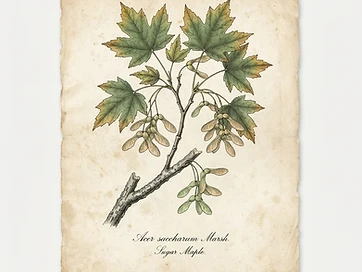
Acer saccharum
Maple Leaf
Sapindaceae
Mild, sweet, woody, slightly earthy