
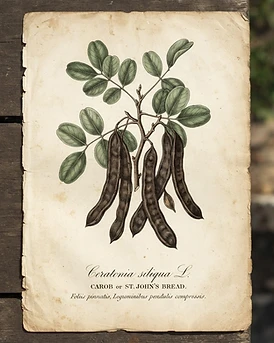
Ceratonia siliqua
Carob
Fabaceae
Identity
- Common Name
- Carob
- Scientific Name
- Ceratonia siliqua
- Botanical Family
- Fabaceae
- Native Region
- Mediterranean and Middle East
- Cultivation Regions
- Mediterranean, Middle East, warm temperate regions
- Plant Parts Used
- Pods (ground)
- Synonyms
- Carob Pod, Locust Bean, St. John's Bread
- Caffeine Level
- Caffeine Free
An evergreen tree with glossy leathery pinnate leaves and long dark brown flattened hanging seed pods; the pods (and ground powder) are used.
Historical Background
Carob has been a Mediterranean and Middle Eastern food and drink for millennia, its sweet pods ground into a caffeine-free cocoa-like powder. During wartime and lean times it was a cherished coffee and cocoa substitute, and it remains a gentle, naturally sweet, caffeine-free cup.
Earliest recorded uses: Mediterranean and Middle Eastern traditions for millennia; a sweet, caffeine-free cocoa alternative.
Traditional preparations:
- Carob-pod decoction
- Carob-milk drink
- Cocoa-style brew
Traditional Uses
These uses document historical traditions and do not imply proven effectiveness.
Mediterranean Traditions
Sweet caffeine-free cocoa and coffee alternative.
Modern Herbalism
Gentle digestive and antioxidant cup.
Flavor & Aroma
Aroma: Sweet, cacao-like, nutty, slightly toasty
Tea Information
Safety & Cautions
Research Summary
Carob has a tradition as a sweet digestive, antioxidant, and caffeine-free cocoa alternative; preclinical work shows polyphenol antioxidant and mild blood-sugar-modulating activity. Clinical evidence is limited; it is not a treatment for diarrhea, diabetes, or any disease, though it remains a gentle, naturally sweet cup.
Evidence levels reflect the currently available scientific literature and may change as new research emerges. Where evidence is limited or conflicting, this is stated plainly.
References & Sources
Related Herbs


Aspalathus linearis
Rooibos
Fabaceae
Warm, honeyed, slightly smoky.


Cyclopia genistoides
Honeybush
Fabaceae
Sweet, honey-like, woody, floral

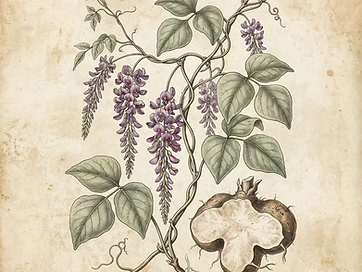
Pueraria lobata
Kudzu
Fabaceae
Sweet, starchy, slightly floral, earthy