
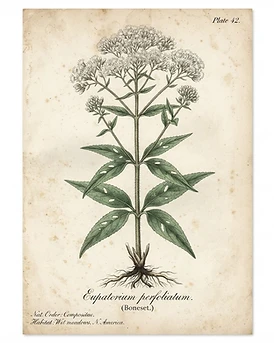
Eupatorium perfoliatum
Boneset
Asteraceae
Identity
- Common Name
- Boneset
- Scientific Name
- Eupatorium perfoliatum
- Botanical Family
- Asteraceae
- Native Region
- Eastern North America
- Cultivation Regions
- North America, Europe (ornamental)
- Plant Parts Used
- Leaves and flowering tops
- Synonyms
- Thoroughwort, Ague Weed, Feverwort, Sweating Plant
- Caffeine Level
- Caffeine Free
A tall native American perennial whose pairs of opposite lance-shaped leaves appear to be pierced (perfoliate) by the stout stem. Crowns of small, fuzzy white flowers bloom in late summer.
Historical Background
A signature remedy of 19th-century American Eclectic and Thomsonian practice for the fevers and bone-aching chills of influenza and malaria ('ague'). The name 'boneset' refers to the deep aching it was used to relieve.
Earliest recorded uses: Inducing sweating to break fevers, relieving the bone-ache of influenza, and as a bitter digestive tonic.
Cultural significance: Among the most-used Native American febrifuges adopted by settlers; long listed in the United States Pharmacopeia.
Indigenous
Native American groups use boneset for fevers and colds.
19th century
A mainstay of Eclectic and Thomsonian practice for 'ague' and influenza.
20th century
Declines as quinine and modern antipyretics displace it.
Traditional preparations:
- Warm infusion (very bitter)
- Cold infusion (less nauseating)
Traditional Uses
These uses document historical traditions and do not imply proven effectiveness.
Native American Traditions
Infusion drunk warm to promote sweating and ease the aching of fever.
Traditional European Herbalism (adopted)
Adopted by settlers as a diaphoretic and bitter tonic.
Flavor & Aroma
Aroma: Faint, pungent and hay-like
Tea Information
Safety & Cautions
Research Summary
Used almost entirely on traditional grounds; controlled trials are lacking. Pharmacological interest centers on sesquiterpene lactones, but modern evidence does not establish efficacy for fever.
Evidence levels reflect the currently available scientific literature and may change as new research emerges. Where evidence is limited or conflicting, this is stated plainly.
References & Sources
References & Sources
- American Botanical Council · Expanded Commission E Monographs (2000)
- American Herbal Products Association · Botanical Safety Handbook (2013)
Related Herbs


Echinacea purpurea
Echinacea
Asteraceae
Earthy, floral, slightly sharp

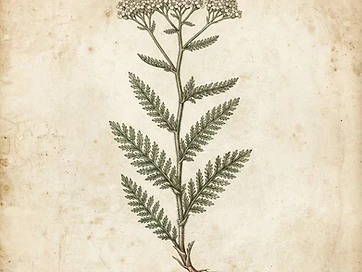
Achillea millefolium
Yarrow
Asteraceae
Herbal, bitter, slightly sweet, aromatic


Calendula officinalis
Calendula
Asteraceae
Warm, floral, faintly honeyed