


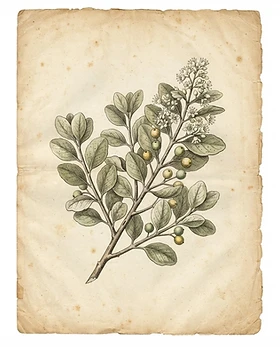
Peumus boldus
Boldo
Monimiaceae
Identity
- Common Name
- Boldo
- Scientific Name
- Peumus boldus
- Botanical Family
- Monimiaceae
- Native Region
- Chile (Andean foothills)
- Cultivation Regions
- Chile, Peru, Mediterranean (cultivated)
- Plant Parts Used
- Leaves
- Synonyms
- Boldina, Boldo Leaf, Chilean Boldo
- Caffeine Level
- Caffeine Free
An evergreen shrub of Chilean hills with small oval leathery aromatic leaves, small clustered white bell-like flowers, and small edible green-yellow berries; the leaves are the part used.
Historical Background
Boldo is a fragrant evergreen of the Chilean hills, used for centuries by the Mapuche people for digestive and liver comfort. Its warm, camphor-like leaves brew a traditional South American after-meal tea, later adopted in European herbalism.
Earliest recorded uses: Indigenous Mapuche traditions of Chile for centuries; a digestive and liver herb later adopted in South American and European medicine.
Traditional preparations:
- Leaf infusion
- After-meal digestive tea
- Blends with mint & fennel
Traditional Uses
These uses document historical traditions and do not imply proven effectiveness.
Indigenous Traditions
Digestive and liver comfort tea; Mapuche tradition.
Modern Herbalism
Bitter digestive and liver tea.
Flavor & Aroma
Aroma: Aromatic, warm, slightly bitter, camphor-like
Tea Information
Safety & Cautions
Research Summary
Boldo has a tradition as a digestive and liver herb; preclinical work shows antioxidant and choleretic activity. Clinical evidence is insufficient and it is not a treatment for liver disease, gallstones, or any condition; avoid in liver/bile-duct disease.
Evidence levels reflect the currently available scientific literature and may change as new research emerges. Where evidence is limited or conflicting, this is stated plainly.
References & Sources
Related Herbs


Origanum vulgare
Oregano
Lamiaceae
Warm, herbaceous, slightly spicy, aromatic

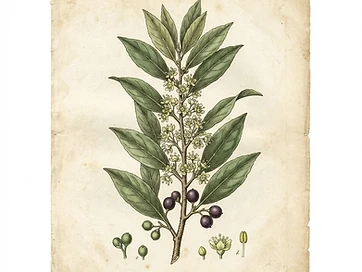
Laurus nobilis
Bay Leaf
Lauraceae
Warm, aromatic, slightly floral, balsamic

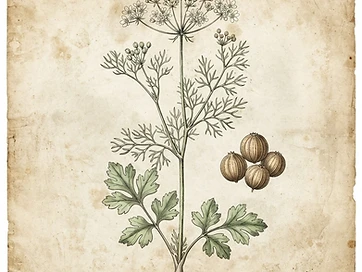
Coriandrum sativum
Coriander
Apiaceae
Warm, citrus-like, slightly sweet, aromatic