

Origanum vulgare
Oregano
Lamiaceae
Identity
- Common Name
- Oregano
- Scientific Name
- Origanum vulgare
- Botanical Family
- Lamiaceae
- Native Region
- Mediterranean basin
- Cultivation Regions
- Mediterranean, Europe, North America
- Plant Parts Used
- Aerial parts
- Synonyms
- Wild Marjoram, Oregano, Mountain Joy
- Caffeine Level
- Caffeine Free
A bushy upright perennial with opposite oval grey-green toothed leaves on square stems and small clusters of tiny tubular pink-purple flowers in bracted heads; the aerial parts are used.
Historical Background
Oregano has been a Mediterranean culinary and medicinal herb for millennia, prized by Greeks and Romans for its aromatic leaves. A gentle tea of the leaves is traditionally sipped for respiratory and digestive comfort.
Earliest recorded uses: Mediterranean and Greek traditions for millennia; a culinary and respiratory herb.
Traditional preparations:
- Aerial-part infusion
- Respiratory tea with thyme
- Digestive tea
Traditional Uses
These uses document historical traditions and do not imply proven effectiveness.
Mediterranean Traditions
Culinary and respiratory herb of the Mediterranean.
Modern Herbalism
Respiratory and digestive tea.
Flavor & Aroma
Aroma: Warm, herbaceous, slightly spicy, aromatic
Tea Information
Safety & Cautions
Research Summary
Oregano has a tradition for respiratory and digestive comfort; preclinical work shows antioxidant and antimicrobial activity (carvacrol, thymol). Clinical evidence is insufficient; it is not a treatment for infection, cough, or any disease, and the pure essential oil should not be taken internally.
Evidence levels reflect the currently available scientific literature and may change as new research emerges. Where evidence is limited or conflicting, this is stated plainly.
References & Sources
Related Herbs

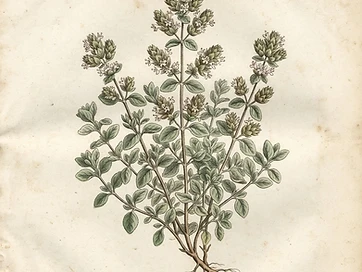
Origanum majorana
Marjoram
Lamiaceae
Warm, aromatic, slightly spicy, green


Satureja hortensis
Savory
Lamiaceae
Warm, peppery, piney, herbaceous

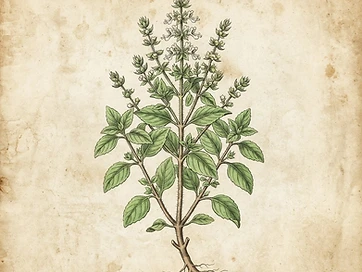
Ocimum basilicum
Sweet Basil
Lamiaceae
Sweet, peppery, herbaceous, slightly anise-like