
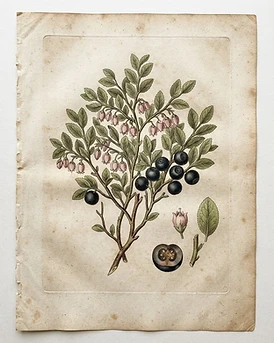
Vaccinium myrtillus
Bilberry
Ericaceae
Identity
- Common Name
- Bilberry
- Scientific Name
- Vaccinium myrtillus
- Botanical Family
- Ericaceae
- Native Region
- Northern Europe and northern Asia
- Cultivation Regions
- Northern Europe, British Isles, Scandinavia, North America
- Plant Parts Used
- Berries, Leaves
- Synonyms
- European Blueberry, Whortleberry, Huckleberry
- Caffeine Level
- Caffeine Free
A low shrub 15-60 cm tall with small ovate finely toothed green leaves, small pale pink bell-shaped flowers, and round dark blue-black berries with purple flesh; the berries and leaves are used.
Historical Background
Bilberry has been a beloved wild fruit of northern European forests for centuries, gathered for jams, pies, and a tart, antioxidant-rich tea. Famous (perhaps apocryphally) for WWII pilots' night vision, its deep purple berries carry the anthocyanin folk tradition for eyes and circulation.
Earliest recorded uses: European folk medicine for centuries; WWII pilots famously ate bilberry jam for night vision (anecdotal).
Traditional preparations:
- Berry infusion/decoction
- Antioxidant tea with rose hips
- Eye & circulation blend
Traditional Uses
These uses document historical traditions and do not imply proven effectiveness.
Traditional European Herbalism
Wild fruit tea for eyes, circulation, and digestion.
Modern Herbalism
Antioxidant and eye-comfort fruit tea.
Flavor & Aroma
Aroma: Fruity, slightly tart, green, earthy
Tea Information
Safety & Cautions
Research Summary
Bilberry has a tradition for eye and circulatory support, rich in anthocyanins. Clinical evidence is limited and mixed; it is not a treatment for eye disease, retinopathy, varicose veins, or any condition, though it remains a popular antioxidant fruit tea.
Evidence levels reflect the currently available scientific literature and may change as new research emerges. Where evidence is limited or conflicting, this is stated plainly.
References & Sources
Related Herbs


Arctostaphylos uva-ursi
Uva Ursi
Ericaceae
Astringent, earthy, green, mildly bitter

Vaccinium macrocarpon
Cranberry
Ericaceae
Fresh, fruity, sharp


Crataegus monogyna
Hawthorn
Rosaceae
Mild, slightly tart, fruity, green