
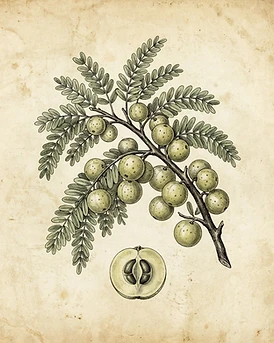
Phyllanthus emblica
Amla
Phyllanthaceae
Identity
- Common Name
- Amla
- Scientific Name
- Phyllanthus emblica
- Botanical Family
- Phyllanthaceae
- Native Region
- India and tropical Asia
- Cultivation Regions
- India, Southeast Asia, Middle East
- Plant Parts Used
- Fruit
- Synonyms
- Indian Gooseberry, Amalaki, Emblic
- Caffeine Level
- Caffeine Free
A small to medium deciduous tree with small simple oblong leaves arranged in a feathered pattern, and round pale green-yellow berries; the fruit is the part used, rich in vitamin C and tannins.
Historical Background
Amla (Indian gooseberry, amalaki) is one of the most revered rasayana herbs of Ayurveda, used for over 3,000 years for vitality, hair, and longevity. Its sour, vitamin-C-rich fruit is the lead ingredient of Triphala and is brewed or candied as a daily rejuvenating tonic.
Earliest recorded uses: Ayurvedic texts for millennia; a premier rasayana (rejuvenative) and key component of Triphala.
Traditional preparations:
- Dried-fruit infusion
- Triphala tea (with haritaki & bibhitaki)
- Amla & honey tonic
Traditional Uses
These uses document historical traditions and do not imply proven effectiveness.
Ayurveda
Premier rasayana for vitality, longevity, hair, and digestion; lead Triphala fruit.
Modern Herbalism
Antioxidant and vitamin-C-rich vitality tea.
Flavor & Aroma
Aroma: Sour, astringent, slightly sweet, green
Tea Information
Safety & Cautions
Research Summary
Amla is a traditional rasayana and rich source of vitamin C and antioxidants. Clinical evidence is limited; preclinical work shows antioxidant and anti-inflammatory activity, but it is not a treatment for diabetes, cholesterol, cancer, or any disease.
Evidence levels reflect the currently available scientific literature and may change as new research emerges. Where evidence is limited or conflicting, this is stated plainly.
References & Sources
Related Herbs

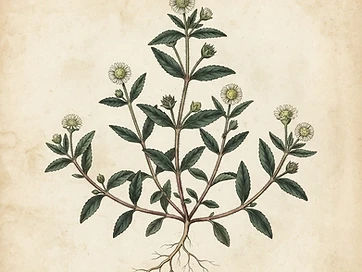
Eclipta prostrata
Bhringraj
Asteraceae
Mild, slightly bitter, green

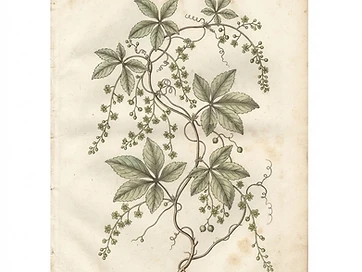
Gynostemma pentaphyllum
Jiaogulan
Cucurbitaceae
Mild, slightly sweet, green, beany


Tribulus terrestris
Tribulus
Zygophyllaceae
Mild, slightly bitter, green