
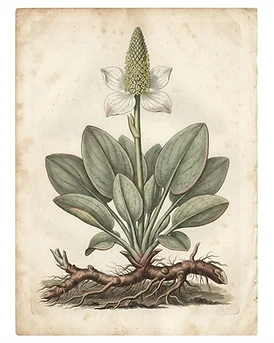
Anemopsis californica
Yerba Mansa
Saururaceae
Identity
- Common Name
- Yerba Mansa
- Scientific Name
- Anemopsis californica
- Botanical Family
- Saururaceae
- Native Region
- Southwestern United States and northern Mexico
- Cultivation Regions
- Southwestern United States, Northern Mexico
- Plant Parts Used
- Aerial parts, Root
- Synonyms
- Gentle Herb, Lizard Tail, Swamp Root
- Caffeine Level
- Caffeine Free
A low spreading wetland perennial with large basal grey-green oval leaves and a conical white flower spike surrounded by a ring of white petal-like bracts, and a thick creeping aromatic root; the whole plant is used.
Historical Background
Yerba mansa ('gentle herb') is a wetland plant of the American Southwest, used for centuries by Indigenous Pueblo, Navajo, and Cahuilla peoples for respiratory, urinary, and skin comfort. Spanish settlers adopted its gentle, aromatic tea, and it remains a Southwestern folk favorite.
Earliest recorded uses: Indigenous Southwestern (Pueblo, Navajo, Cahuilla) traditions for centuries; adopted by Spanish settlers and Eclectic physicians.
Traditional preparations:
- Aerial-part/root infusion
- Respiratory tea
- Southwestern soak (off-tea)
Traditional Uses
These uses document historical traditions and do not imply proven effectiveness.
Indigenous Traditions
Respiratory, urinary, and skin comfort; Southwestern folk tonic.
Modern Herbalism
Respiratory and urinary-comfort tea.
Flavor & Aroma
Aroma: Earthy, slightly peppery, aromatic, green
Tea Information
Safety & Cautions
Research Summary
Yerba mansa has a long Indigenous tradition for respiratory, urinary, and skin comfort. Clinical evidence is insufficient; preclinical work shows antimicrobial and anti-inflammatory activity, but it is not a treatment for infection, sinusitis, or any disease.
Evidence levels reflect the currently available scientific literature and may change as new research emerges. Where evidence is limited or conflicting, this is stated plainly.
References & Sources
Related Herbs

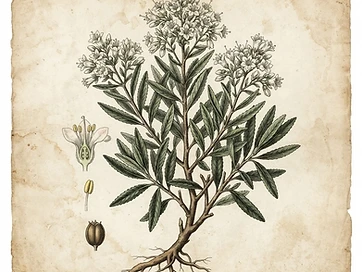
Eriodictyon californicum
Yerba Santa
Boraginaceae
Resinous, earthy, slightly bitter, green


Moringa oleifera
Moringa
Moringaceae
Mild, slightly peppery, green, earthy


Scutellaria baicalensis
Baikal Skullcap
Lamiaceae
Mild, slightly bitter, green, earthy