


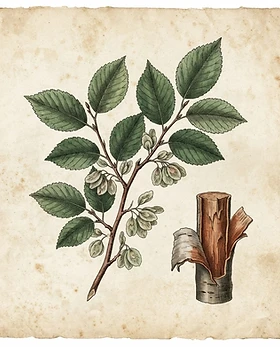
Ulmus rubra
Slippery Elm
Ulmaceae
Identity
- Common Name
- Slippery Elm
- Scientific Name
- Ulmus rubra
- Botanical Family
- Ulmaceae
- Native Region
- Eastern and central North America
- Cultivation Regions
- Eastern and central North America
- Plant Parts Used
- Inner bark
- Synonyms
- Red Elm, Indian Elm, Moose Elm
- Caffeine Level
- Caffeine Free
A medium deciduous tree with large rough oval toothed leaves, small flat seed clusters, and a reddish-brown inner bark rich in soothing mucilage; the inner bark is the part used.
Historical Background
Slippery elm has been a soothing remedy of Native American and early American medicine for centuries, its inner bark chewed or brewed for a gentle, mucilaginous gruel for throats and digestion. Listed in the US Pharmacopeia, it remains a beloved comforting herb — though wild trees are endangered, so cultivated bark is preferred.
Earliest recorded uses: Native American traditions for centuries; adopted into early American medicine and listed in the US Pharmacopeia.
Traditional preparations:
- Inner bark decoction
- Soothing gruel
- Throat blend with licorice & marshmallow
Traditional Uses
These uses document historical traditions and do not imply proven effectiveness.
Native American Traditions
Soothing throat, digestive, and wound herb; nourishing gruel.
Modern Herbalism
Gentle demulcent for throat and gut comfort.
Flavor & Aroma
Aroma: Mild, earthy, slightly sweet, mucilaginous
Tea Information
Safety & Cautions
Research Summary
Slippery elm has a long tradition as a soothing throat and digestive herb. Clinical evidence is insufficient; its mucilage offers demulcent comfort, but it is not a treatment for GERD, IBD, sore throat, or any disease, and may slow medication absorption.
Evidence levels reflect the currently available scientific literature and may change as new research emerges. Where evidence is limited or conflicting, this is stated plainly.
References & Sources
Related Herbs


Malva sylvestris
Mallow
Malvaceae
Mild, green, slightly sweet, mucilaginous


Althaea officinalis
Marshmallow Root
Malvaceae
Faint, sweet, earthy

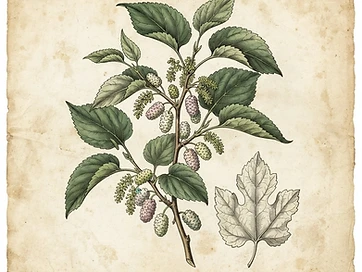
Morus alba
White Mulberry Leaf
Moraceae
Mild, slightly sweet, green, earthy