

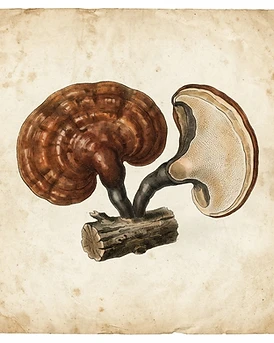
Ganoderma lucidum
Reishi
Ganodermataceae
Identity
- Common Name
- Reishi
- Scientific Name
- Ganoderma lucidum
- Botanical Family
- Ganodermataceae
- Native Region
- East Asia (temperate hardwood forests)
- Cultivation Regions
- China, Japan, Korea, North America (cultivated)
- Plant Parts Used
- Fruiting body, Spores
- Synonyms
- Lingzhi, Mushroom of Immortality, Reishi
- Caffeine Level
- Caffeine Free
A bracket (shelf) fungus growing on hardwood trees, with a broad kidney-shaped cap bearing a glossy reddish-brown lacquered surface with concentric growth rings, a short lateral stem, and a pale underside of tiny pores.
Historical Background
Reishi (Lingzhi, 'spirit plant') has been revered in China and Japan for over two thousand years as a tonic for longevity, vitality, and calm. The 'mushroom of immortality' in Daoist tradition, its tough, woody fruiting body is simmered long into a bitter decoction rather than steeped briefly.
Earliest recorded uses: Recorded in the Shennong Ben Cao Jing (~2000 years ago) as a premier tonic; called the 'mushroom of immortality.'
Traditional preparations:
- Long decoction of dried slices
- Dual extract (water + alcohol, off-tea)
- Blended with green tea
Traditional Uses
These uses document historical traditions and do not imply proven effectiveness.
Traditional Chinese Medicine
Premier calmative, immune, and longevity (Qi-tonifying) tonic; calms the spirit.
Modern Herbalism
Adaptogen for stress, immune support, and vitality.
Flavor & Aroma
Aroma: Bitter, earthy, woody, umami
Tea Information
Safety & Cautions
Research Summary
Reishi has a long tradition as a calming, immune, and longevity tonic. Small trials and preclinical work suggest modest effects on fatigue, immune markers, and inflammation, but evidence is limited and it is not a treatment for cancer, infection, hypertension, or any disease.
Evidence levels reflect the currently available scientific literature and may change as new research emerges. Where evidence is limited or conflicting, this is stated plainly.
References & Sources
Related Herbs

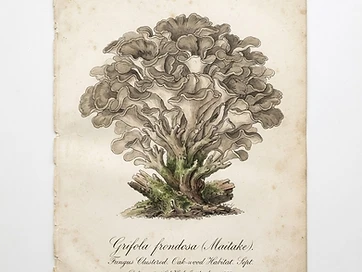
Grifola frondosa
Maitake
Meripilaceae
Deep, foresty, mushroom


Inonotus obliquus
Chaga
Hymenochaetaceae
Earthy, vanilla-like, woody, slightly smoky


Bacopa monnieri
Brahmi (Bacopa)
Plantaginaceae
Bitter, earthy, green, slightly buttery